


TL;DR:
- Solid wood furniture is safer for indoor air quality due to zero formaldehyde and VOC emissions.
- Responsibly sourced wood reduces environmental impact and is biodegradable, unlike plastics or metals.
- Wood interiors promote emotional comfort, reducing stress and fostering coziness for children.
Most parents spend hours researching car seats and baby monitors, but almost nobody stops to question what their child’s dresser is made of. Engineered wood products and plastics release invisible chemicals into the air your child breathes every single night. The good news is that the solution is simple, beautiful, and has been around for centuries. Solid wood is safer for indoor air quality, better for the planet, and proven to make children feel calmer and more at ease. This guide breaks down exactly why wood belongs in your child’s room and how to choose it wisely.
Table of Contents
- The health and safety advantages of wood
- Why wood is a sustainable choice for families
- Emotional and psychological comfort: The wood effect
- Choosing and caring for wood in kids’ rooms: Practical tips
- The truth most parents miss when designing kids’ rooms
- Bring warmth and safety home with Crawoo’s custom wood decor
- Frequently asked questions
Key Takeaways
| Point | Details |
|---|---|
| Solid wood is safest | It contains no harmful chemicals and keeps your child’s air clean. |
| Wood supports sustainability | Responsibly sourced wood uses less energy and helps the environment. |
| Comfort goes beyond style | Wooden interiors make kids’ rooms feel cozier and support emotional well-being. |
| Certification matters | Always choose certified wood and low-VOC finishes for safety and quality. |
| Practical upkeep is easy | Simple care routines keep wood furniture safe, stylish, and long-lasting. |
The health and safety advantages of wood
Material choice is one of the most overlooked decisions in a child’s room. Most furniture looks fine on the surface, but what it releases into the air tells a very different story.
Engineered woods like MDF (medium-density fiberboard) and particleboard are bonded together with adhesives that contain formaldehyde, a known carcinogen. Plastics can off-gas BPA and other volatile organic compounds (VOCs), which are airborne chemicals that irritate airways and affect developing nervous systems. Children are especially vulnerable because they breathe more air relative to their body weight than adults do.
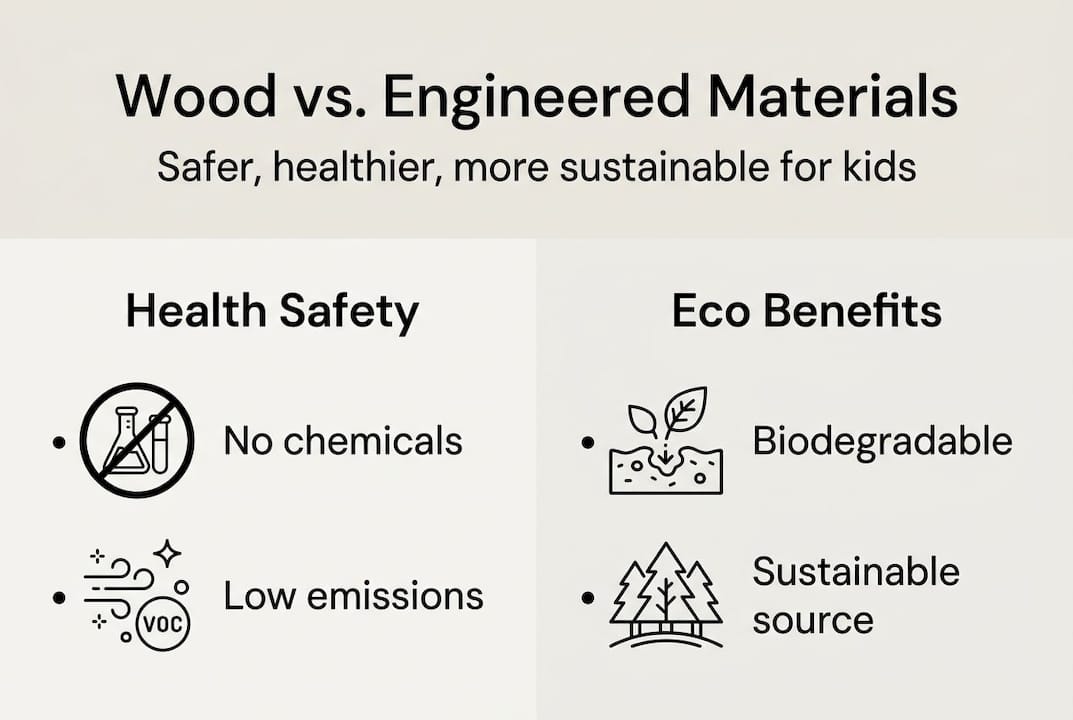
Solid wood is different. Solid wood furniture is non-toxic, free from harmful chemicals like formaldehyde, BPA, and VOCs. That single fact changes everything when you are designing a room where your child will sleep for ten or more hours a night.
| Material | Formaldehyde emissions | VOC risk | Hypoallergenic |
|---|---|---|---|
| Solid wood | 0 ppm | Very low | Yes |
| MDF / particleboard | Up to 0.13 ppm | Moderate to high | No |
| Plastic | None | Moderate | No |
| Metal | None | Low | Generally yes |
Solid wood also has natural hypoallergenic qualities. It does not harbor dust mites as easily as upholstered surfaces, and it does not shed microplastics the way synthetic materials do. For children with asthma or sensitive skin, this matters enormously.
Here is what to look for when prioritizing health:
- FSC-certified solid wood (more on this below)
- Zero or low-VOC finishes, such as water-based lacquers or natural oils
- No added formaldehyde in the product description
- GREENGUARD Gold certification on finished furniture
Pro Tip: Ask the manufacturer directly whether their finish is water-based or oil-based. Water-based finishes cure faster and off-gas far less than solvent-based alternatives.
Building safe, cozy nurseries starts with understanding what is in the air, not just what is on the shelf. If you want a deeper look at how to apply this knowledge room by room, explore safe, natural wood solutions that meet modern safety standards.
Why wood is a sustainable choice for families
Safety is not the only reason parents choose wood. It is also about caring for the planet your child will inherit.
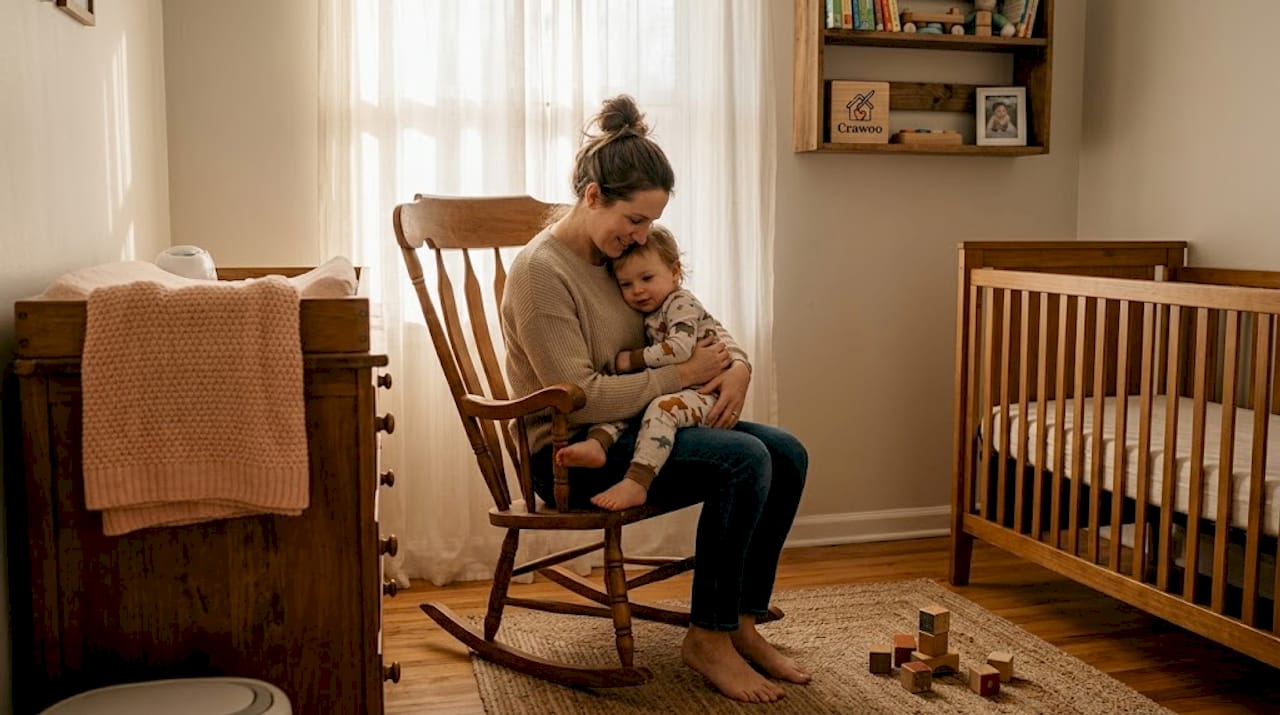
Plastic production is energy-intensive and relies on fossil fuels. Metal furniture requires mining and smelting, both of which carry a heavy carbon cost. Wood, when responsibly sourced, tells a completely different story. Wood is a renewable, biodegradable material with a lower production energy footprint and carbon impact compared to plastics or metals. Trees absorb carbon dioxide as they grow, and sustainably managed forests are replanted continuously.
Biodegradability matters too. A solid wood crib that reaches the end of its life breaks down naturally. A plastic one sits in a landfill for hundreds of years.
| Material | Renewable | Biodegradable | Carbon footprint |
|---|---|---|---|
| Solid wood (FSC) | Yes | Yes | Low |
| Plastic | No | No | High |
| Metal | Limited | No | High |
| MDF | Partial | No | Moderate |
Certifications help you separate genuine sustainability from marketing language. Here is what they actually mean:
- FSC (Forest Stewardship Council): Verifies that wood was harvested from responsibly managed forests with protections for ecosystems and workers.
- GREENGUARD Gold: Confirms that a finished product emits low levels of VOCs, specifically tested for environments where children spend time.
- Rainforest Alliance: Signals broader environmental and social standards in the supply chain.
Pro Tip: Look for water-based finishes on any wood piece you bring into the nursery. They dry faster, smell less, and release fewer chemicals into the room over time.
Choosing wood is a long-term investment in both your family and the environment. You can find more detail on the full range of wooden nursery decor benefits, or browse eco-friendly decor inspiration if you are starting to plan the look of the room.
Emotional and psychological comfort: The wood effect
Beyond the obvious physical benefits, wood also brings emotional comfort into your child’s room. This is not just intuition. Research backs it up.
A key finding from an empirical study on interior materials found that wooden interiors improve psychological comfort, coziness, and reduce fatigue and negative mood in occupants. Children are especially responsive to their environment because their nervous systems are still developing. A room that feels warm and natural supports rest, play, and emotional regulation in ways that a cold, synthetic space simply cannot.
“Wood interiors are associated with greater feelings of coziness, relaxation, and reduced negative mood compared to non-wood environments.” — Empirical study on wood effects in interior spaces
Here are the core psychological benefits wood brings to a child’s room:
- Reduced stress and fatigue: Natural materials signal safety to the brain, lowering cortisol levels during rest.
- Greater sense of warmth: Wood tones create visual warmth that makes a room feel inviting rather than clinical.
- Improved mood: Children in wood-rich environments report feeling more comfortable and at ease.
- Better sleep association: A cozy, calming room helps children wind down faster at bedtime.
The key is balance. A room covered entirely in dark wood can feel heavy. Aim for wood as an anchor element, a crib, a shelf, a name sign, a wall panel, and layer it with soft textiles and light colors. This creates the optimal mix of warmth without overstimulation.
For more on how specific pieces contribute to well-being, see our guide to custom wood art for well-being. You can also explore the emotional warmth of wood and how it shapes the feeling of a room from day one.
Choosing and caring for wood in kids’ rooms: Practical tips
Understanding why wood matters means you also need to know how to select and maintain it for everyday family life. Good choices upfront save you money, stress, and potential health concerns later.
When shopping for wooden furniture or decor, keep this checklist in mind:
- Hardwood over softwood for furniture that takes daily wear (oak, maple, and beech are excellent choices)
- FSC certification on the wood itself
- GREENGUARD Gold certification on the finished piece
- Water-based or natural oil finish with zero or low VOC content
- No antique or painted pieces with unknown finish history (old paints can contain lead)
Prioritize FSC-certified solid hardwoods with zero or low-VOC finishes. Experts note that certifications like GREENGUARD Gold are the clearest signal that a product has been tested for the low emissions that matter most in children’s spaces.
Once you have chosen well, maintenance is straightforward. Follow these steps to keep wood safe and beautiful:
- Dust weekly with a dry or slightly damp microfiber cloth. Avoid soaking the wood.
- Clean spills immediately with a damp cloth and mild, fragrance-free soap. Dry the surface right away.
- Re-oil or re-wax annually if your piece has an oil or wax finish. This protects the wood and maintains its natural barrier.
- Avoid harsh chemical cleaners like bleach or ammonia-based sprays. They strip the finish and can leave residue.
- Check for wear on high-contact areas like crib rails and chair arms. Sand and refinish with a safe product if the finish is compromised.
Following best practices for finishing and treating wood keeps your furniture performing safely for years. A little routine care goes a long way.
Pro Tip: A simple annual wipe-down with a food-grade oil like beeswax or linseed oil keeps most natural wood pieces in excellent condition without introducing any new chemicals.
For room-specific guidance, explore wood decor for toddlers or check out the latest nursery wood trends to see how other families are styling their spaces.
The truth most parents miss when designing kids’ rooms
Here is something the home decor industry does not advertise loudly: not all wood products are created equal. A piece labeled “wood” or even “natural” can still be a pressed-board product with high formaldehyde emissions and a solvent-based finish that off-gasses for months.
Vague terms like “eco-friendly” and “natural” are not regulated. Any brand can use them. What actually protects your child is certification, not language. FSC and GREENGUARD Gold are third-party verified. Marketing copy is not.
We have seen parents spend considerable time choosing organic crib sheets while placing a high-emission MDF dresser two feet from where their baby sleeps. The intention is right. The information is missing. True well-being in a child’s room comes from intentional, evidence-based choices, not from following trends or trusting pretty packaging.
If you want to understand why wood truly matters beyond the surface, the data is clear. Solid, certified wood is not just a style preference. It is a health decision backed by research.
Bring warmth and safety home with Crawoo’s custom wood decor
At Crawoo, every piece is designed with parents like you in mind. Safe materials, clean finishes, and thoughtful craftsmanship come together in decor that makes your child’s room feel like the nurturing space it should be.
From a beautifully crafted custom nursery name sign to charming wooden animal wall decor, each item is made to add warmth without compromise. Browse the full collection of personalized wooden signs and find the pieces that speak to your family’s style. Safe, stylish, and made to last, this is wooden decor you can feel good about from day one.
Frequently asked questions
Is solid wood really safer than engineered wood or MDF for kids’ rooms?
Yes. Solid wood emits 0 ppm formaldehyde compared to up to 0.13 ppm in engineered wood, making it far safer for the indoor air your child breathes every night.
How can I tell if a wood product is sustainably sourced?
Look for FSC or GREENGUARD Gold certifications. FSC-certified wood and GREENGUARD Gold finishes verify responsible sourcing and confirm that chemical emissions are within safe limits for children.
What is the optimal amount of wood for comfort in a child’s room?
Research shows that moderate wood coverage maximizes psychological comfort and coziness. Too little loses the calming effect, while too much can feel heavy. Use wood as an anchor and layer with soft textiles.
Are water-based or oil finishes better for nursery furniture?
Water-based finishes are generally the safer choice. They emit fewer VOCs, cure faster, and are less likely to trigger sensitivities. Zero or low-VOC water-based finishes are the standard recommended by experts for children’s spaces.
Recommended
Subscribe to Our Newsletter
Leave a comment