


TL;DR:
- Quality wooden nursery furniture is durable, versatile, and environmentally friendly.
- Safety standards require lead-free finishes, wall-mounting, and rounded edges for toddler rooms.
- Regular maintenance and proper anchoring are essential for a safe, long-lasting space.
Most parents assume they have to pick a side: a toddler room that looks beautiful, or one that’s actually safe. Wood decor gets caught in the middle of that debate more than almost anything else. The truth is, modern wooden nursery pieces can be both stunning and secure when you know what to look for. This guide walks you through the real benefits of wood, the safety standards that matter, how to design a room your toddler can thrive in, and how to keep everything looking great for years to come.
Table of Contents
- Why choose wood decor for toddler rooms?
- Understanding safety standards and requirements
- Designing a toddler-friendly space with wood elements
- Maintenance and longevity of wood decor in toddler rooms
- A realistic perspective: what matters most when choosing wood decor for toddlers
- Find the perfect wooden decor for your toddler room
- Frequently asked questions
Key Takeaways
| Point | Details |
|---|---|
| Prioritize certified safety | Choose wood decor products that meet current ASTM and CPSC standards for peace of mind. |
| Mix style with practicality | Select wood pieces that are both beautiful and help prevent common toddler hazards like tip-overs. |
| Consider maintenance | Simple cleaning and routine checks will keep wood decor safe and attractive as your toddler grows. |
| Focus on the essentials | A few well-chosen wooden items can transform a toddler room’s look and function without clutter. |
Why choose wood decor for toddler rooms?
Wood has been a go-to material for children’s furniture for centuries, and there are very good reasons it hasn’t gone anywhere. Real hardwood and quality engineered wood are built to survive toddler energy: the banging, the climbing, the spills, and the general chaos that comes with kids aged one to four. Unlike plastic or MDF furniture with flimsy finishes, well-made wooden pieces hold their shape and structure through years of use.
Beyond durability, wood is genuinely versatile in terms of style. You can finish it to look sleek and modern with a white or gray wash, warm and rustic with a natural stain, or bright and playful with non-toxic paint. That flexibility means your decor can grow with your child’s room and your own taste over time. The wooden nursery decor safety and style balance is more achievable than most parents realize.
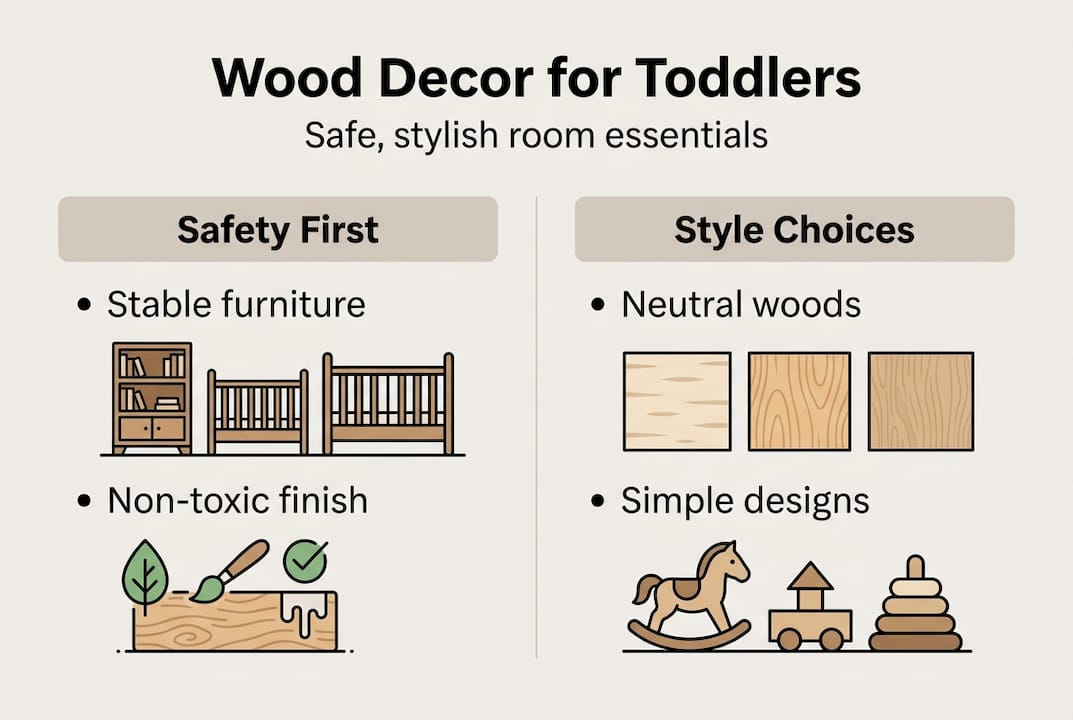
Safety has improved dramatically in recent years. Reputable manufacturers now use phthalate-free and lead-free finishes as standard practice, and construction methods have gotten more rigorous. Safe engineered woods like particleboard, plywood, and MDF made from virgin or pre-consumer waste are confirmed to meet lead and phthalate limits under federal standards. That’s a meaningful reassurance for parents who worry about chemical exposure.
Wood also wins on environmental grounds. Compared to synthetic materials like PVC or certain plastics, sustainably sourced wood has a far smaller environmental footprint. Many timeless wooden decor pieces are made from FSC-certified wood, meaning the sourcing is tracked and responsible.
- Durability: Hardwood and quality engineered wood withstand years of active toddler use.
- Style range: Can be finished modern, rustic, or playful to match any nursery aesthetic.
- Safety: Lead-free and phthalate-free finishes are now widely available and federally regulated.
- Eco-friendly: Sustainably sourced wood has a lower environmental impact than most synthetics.
“Choosing wood decor isn’t just an aesthetic decision. It’s a long-term investment in a safer, more durable environment for your child.”
Understanding safety standards and requirements
Knowing that wood can be safe is one thing. Knowing exactly what to look for when you’re shopping is another. The two main bodies that set the rules in the United States are the Consumer Product Safety Commission (CPSC) and ASTM International. Both publish standards that cover everything from finish toxicity to structural stability.
The latest safety standards from ASTM now specifically require secure wall mounting for shelves, low ground clearance of about 1 cm for beds, and ball-bearing glides in dressers to prevent sudden closures. Tip-over prevention is a major focus, with tip-restraint kits now a required feature for many furniture categories. Finishes must be phthalate-free and lead-free across the board.
Here’s a quick comparison to help you shop with confidence:
| Feature | Safe | Unsafe |
|---|---|---|
| Finish | Lead-free, phthalate-free, water-based | Unknown origin, solvent-heavy, unlabeled |
| Mounting | Wall-anchored shelves and tall furniture | Freestanding with no anchor option |
| Edges | Rounded, sanded smooth | Sharp corners, rough edges |
| Hardware | Recessed or covered screws and bolts | Exposed metal hardware at child height |
| Tip-over risk | Tip-restraint kit included | No stability mechanism |
Before buying any wooden piece for your toddler’s room, run through these steps:
- Check the product listing for ASTM or CPSC compliance language.
- Look for explicit “lead-free” and “phthalate-free” finish labeling.
- Confirm that shelves and tall dressers come with wall-mounting hardware.
- Read recent reviews specifically mentioning safety and structural quality.
- Contact the vendor directly if certifications aren’t clearly listed.
Pro Tip: When a vendor claims their finish is “non-toxic,” ask them to specify whether it meets CPSC or ASTM standards. “Non-toxic” is a marketing term; certified compliance is the real standard.
One edge case worth mentioning: vintage or antique wooden furniture. Pieces made before 1978 may contain lead-based paint and should be refinished or avoided entirely in toddler rooms. The natural solutions for nursery safety approach always starts with verified, current-standard products. You can also check out our wood decor maintenance tips for guidance on keeping older pieces safe if you’ve inherited furniture.
Designing a toddler-friendly space with wood elements
Once you’re confident your products are safe, the next step is bringing your room’s look and layout together strategically. The best toddler rooms aren’t just pretty; they’re set up so that the space itself reduces risk while encouraging play and development.
Start with furniture that adapts as your child grows. The smartest investments are pieces that serve multiple stages:
- Convertible cribs that shift to toddler beds and then full beds.
- Low open shelves that keep toys accessible and reduce climbing temptation.
- Small play tables with rounded edges, sized for ages one to four.
- Wooden wall hooks at child height for bags and costumes.
- Personalized name signs that add warmth without taking up floor space.
Wood type and hardness matter more than most parents realize. For cribs specifically, Janka hardness over 950 lbf is required to ensure the structure won’t crack or splinter under stress. Here’s a quick reference for common wood choices:
| Wood type | Janka hardness (lbf) | Best use | Finish options |
|---|---|---|---|
| Hard maple | 1,450 | Cribs, dressers | Stain, paint, natural |
| White oak | 1,360 | Shelves, tables | Stain, whitewash |
| Beech | 1,300 | Play furniture | Paint, natural |
| Birch plywood | 900 | Wall decor, shelves | Paint, laminate |
| Pine | 870 | Decorative accents | Paint, light stain |
Layout matters as much as the pieces themselves. Keep tall furniture anchored to walls and away from windows where climbing is tempting. Position shelves at adult height or very low, not in the middle zone where a toddler might use them as a ladder. Leave clear floor space in the center of the room for movement. You can find more ideas in our nursery wood decor trends guide and browse inspiring toddler room designs for real layout examples.
Pro Tip: Natural light makes wood tones come alive. Position your main wooden pieces, like a crib or bookshelf, near a window wall to let the grain and finish show their best. Just avoid direct sunlight on the crib itself to prevent overheating.
Maintenance and longevity of wood decor in toddler rooms
With everything beautifully arranged, maintaining your wood decor is the final key to a safe, lasting space. The good news is that wood is forgiving. A few consistent habits will keep your pieces looking great and structurally sound for years.
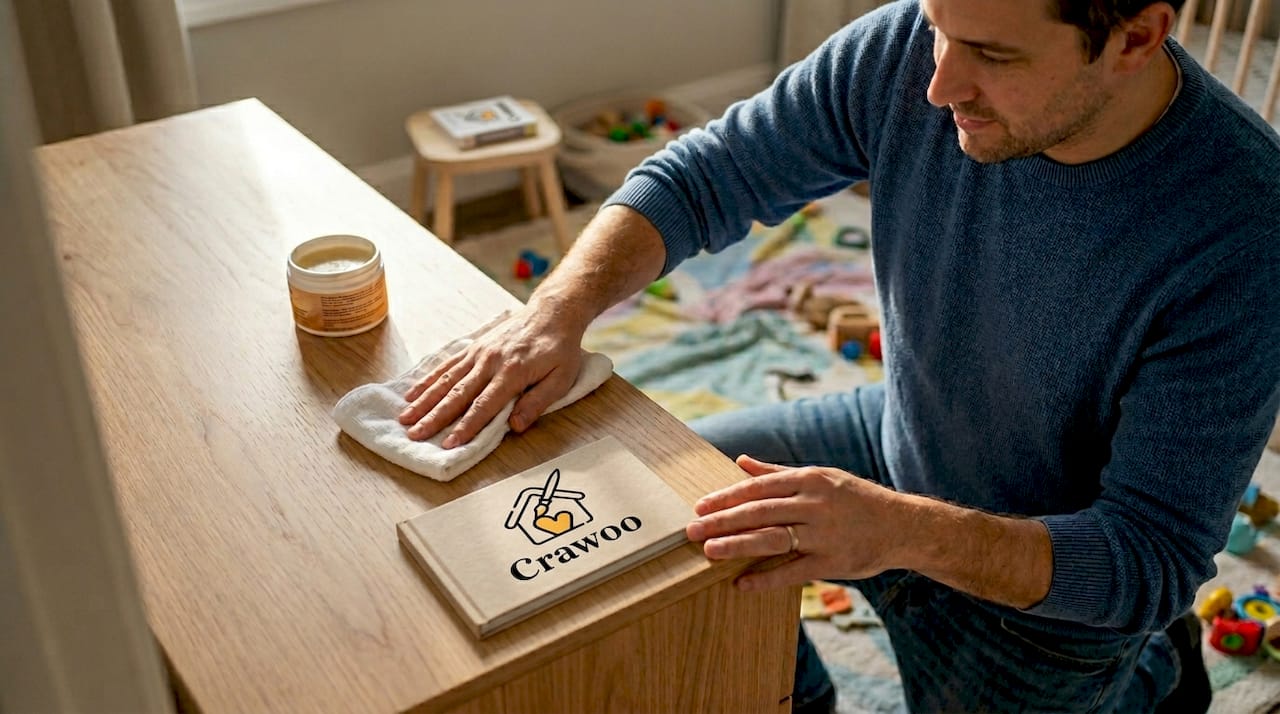
For everyday cleaning, less is more. Wipe surfaces with a slightly damp cloth and a mild, fragrance-free soap. Avoid soaking the wood or using harsh chemical sprays, which can degrade finishes over time. For painted pieces, a dry microfiber cloth handles most toddler messes without stripping color.
Regular safety inspections are just as important as cleaning. Look for:
- Splinters or rough patches along edges and corners.
- Loose screws, bolts, or hardware that a toddler could pull off.
- Cracks or warping in the wood structure.
- Peeling or chipping finish, which could become a chewing hazard.
- Wall anchors that have shifted or loosened over time.
For deeper seasonal maintenance, follow this routine:
- Tighten all visible hardware with the appropriate screwdriver or wrench.
- Re-check wall anchor points on shelves, dressers, and wall decor.
- Sand any rough spots lightly with fine-grit sandpaper and reapply a safe finish.
- Clean inside drawers and shelves where dust and crumbs accumulate.
- Assess whether any pieces need to be replaced as your child grows taller and stronger.
The ASTM furniture safety standard highlights that tip-over risks can be mitigated with kits, but those kits need to be checked regularly too. A kit installed two years ago may have loosened. Our wood decor maintenance guide walks through each of these steps in more detail if you want a full seasonal checklist.
“A five-minute monthly check of your wooden furniture is worth more than any single purchase decision you’ll make for your toddler’s room.”
As your child moves from toddler to preschool age, some pieces will naturally need updating. A crib converts to a bed, a low shelf gets replaced with a taller bookcase. Think of wood decor as a living part of your home that evolves, not a one-time setup.
A realistic perspective: what matters most when choosing wood decor for toddlers
Here’s something most decor guides won’t tell you: the pressure to get everything perfect before your child even notices the room is mostly self-imposed. Social media feeds full of flawlessly styled nurseries can make parents feel like they’re already behind. They’re not.
The real risk factors in toddler rooms are narrow and specific: unsecured tall furniture, toxic finishes, and sharp edges at child height. Everything else is preference. A room with three well-chosen, properly anchored wooden pieces is safer and more functional than a room stuffed with trendy items that haven’t been properly checked.
From our experience working with parents on nursery accessories best practices, the families who feel most confident are the ones who picked a small number of quality wooden items and added to the room gradually. They didn’t try to finish everything at once. They checked hardware every few months. They replaced pieces when their child outgrew them rather than holding on for sentimental reasons.
Perfect safety is not achievable, and chasing it creates anxiety without making rooms meaningfully safer. Focus on the major risks, build a simple maintenance habit, and let the style evolve naturally.
Find the perfect wooden decor for your toddler room
Ready to bring your toddler room vision to life with safe, stylish wood? Here’s where to start.
At Crawoo, we design custom wooden decor that makes it easy to create a room that’s both beautiful and built with your child’s safety in mind. Every piece is crafted with non-toxic finishes and thoughtful construction.
Explore our round nursery name sign for a personalized touch that works in any style room. Browse our wooden animal wall decor for playful, safe wall accents your toddler will love. And if you want something truly one of a kind, our custom wooden sign options let you design exactly what fits your space. Every piece ships ready to hang, so getting started is simple.
Frequently asked questions
Are all types of wood safe for toddler room decor?
No. Choose products with lead and phthalate-free finishes that are certified by ASTM or CPSC. Engineered woods like plywood and MDF from verified sources can meet federal safety limits.
How do I prevent furniture tip-overs in my toddler’s room?
Use wall-mounting kits and select furniture designed with tip-restraint features. Check anchor points every few months to make sure they haven’t loosened.
What finish should I use on wooden toddler furniture?
Only use finishes explicitly labeled lead-free and phthalate-free. Confirm the product meets current ASTM standards before applying or purchasing.
How can I tell if wood furniture is high quality for toddlers?
Look for smooth, splinter-free surfaces, solid joinery, and for cribs specifically, a Janka hardness above 950 lbf to ensure structural integrity under daily use.
Recommended
Subscribe to Our Newsletter
Leave a comment