


TL;DR:
- Solid wood nursery furniture reduces toxic emissions and promotes calm psychological benefits for children.
- Using properly finished, certified wood ensures durability, repairability, and long-term value in nurseries.
- Thoughtful, cohesive wood design creates a safer, calmer environment that positively influences mood and learning.
Most nursery furniture hides a problem you can’t see or smell after the first few days. Manufactured materials like MDF and particleboard release formaldehyde and other volatile organic compounds (VOCs) into the air your baby breathes around the clock. Wood, when properly finished, sidesteps most of these risks while adding something no synthetic material can replicate: a sense of warmth and calm that research now links to real psychological benefits for children. This guide walks you through the science, the safety facts, and the practical steps for building a wood-based nursery that is genuinely nurturing, not just beautiful.
Table of Contents
- Why wood matters for children’s spaces
- Comparing wood and manufactured materials: Safety and durability
- Psychological and sensory benefits: How wood shapes mood and learning
- Best practices: Creating safe, nurturing wood-based children’s spaces
- A fresh perspective on wood in children’s spaces
- Find safe, charming wood decor for your nursery
- Frequently asked questions
Key Takeaways
| Point | Details |
|---|---|
| Wood reduces health risks | Choosing solid wood with non-toxic finishes cuts exposure to harmful chemicals like formaldehyde. |
| Wood improves mood and learning | Research shows wood environments foster comfort, reduce stress, and enhance acoustics for better learning. |
| Mix wood thoughtfully | Balancing wood with complementary materials and textures creates warm, appealing spaces that stay safe. |
| Pick certified wood products | Certified woods like GREENGUARD Gold ensure the lowest possible VOC emissions for nurseries and children’s rooms. |
Why wood matters for children’s spaces
Choosing nursery materials feels overwhelming when every product claims to be “safe” and “natural.” The reality is that material choice has a measurable impact on your child’s health from the very first night home. Wood stands apart for three reasons: what it doesn’t release, what it does for the body, and what it does for the mind.
First, the health piece. Solid wood nursery furniture reduces health risks from off-gassing compared to manufactured materials containing formaldehyde. Babies spend up to 17 hours a day sleeping, which means prolonged exposure to anything the furniture releases. Choosing solid wood with a water-based or natural oil finish dramatically cuts that exposure.
Second, the psychological piece. Wood calms children psychologically, reducing stress and negative mood states, making it ideal for nurturing environments. That’s not marketing language. It’s empirical data from studies on children’s environments, and it changes how you should think about every surface in your nursery.
Here’s what to look for when shopping:
- Solid wood construction rather than veneers over MDF cores
- Water-based or natural oil finishes that cure fully before the piece enters the nursery
- GREENGUARD Gold certification, which tests for over 360 VOCs and chemical emissions
- Joinery quality, because well-fitted joints don’t need as much adhesive, which is another source of off-gassing
- Untreated or minimally treated surfaces on areas a baby might mouth or chew
Pro Tip: Air out any new wood furniture in a well-ventilated room for at least 72 hours before placing it in the nursery, even if it carries a safety certification. This simple step reduces any residual odor from finishing.
“The warmth and texture of wood in a child’s environment isn’t just pleasant — it’s functional. It actively shapes how calm and comfortable a child feels in that space.”
For a deeper look at choosing safe, natural wood nursery decor for your specific setup, it helps to understand which finishes and wood species work best together. You can also explore stylish wooden nursery accessories that combine safety with design. And if you want broader inspiration, styling a nursery with wood covers how designers balance warmth with function.
Comparing wood and manufactured materials: Safety and durability
Having established wood’s advantages, it’s helpful to see how wood stacks up against its main alternatives in children’s spaces. Most budget nursery furniture uses MDF (medium-density fiberboard) or particleboard because these materials are cheap, smooth, and easy to paint. But that convenience comes with trade-offs that matter a lot in a room where a child sleeps and plays every day.
Solid hardwoods like oak, birch, and maple resist wear and pair well with non-toxic finishes that keep VOC levels low. MDF, by contrast, uses urea-formaldehyde resins as a binder, and those resins continue releasing gas for months or even years after manufacturing.
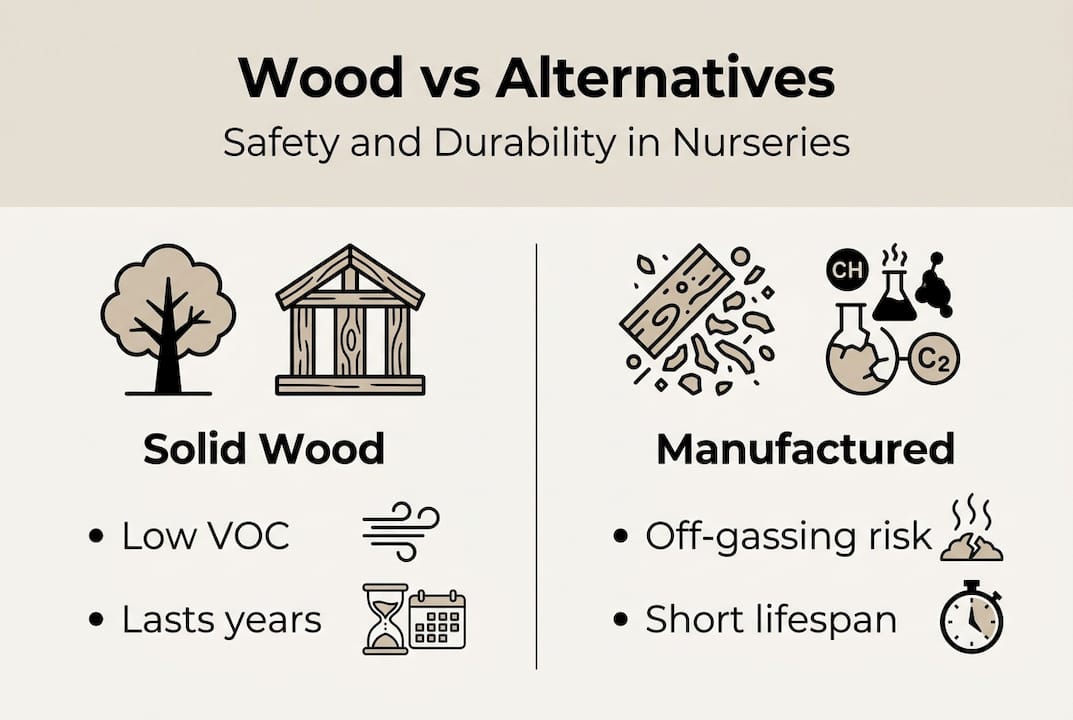
| Feature | Solid wood | MDF or particleboard |
|---|---|---|
| VOC emissions | Low (with proper finish) | Moderate to high |
| Durability | High, resists dents and wear | Chips and swells with moisture |
| Repairability | Can be sanded and refinished | Damage is usually permanent |
| Lifespan | Decades with basic care | 5 to 10 years typical |
| Chemical binders | None | Urea-formaldehyde resins |
| Resale or reuse value | Strong | Low |
Beyond the table, a few practical points are worth noting:
- Solid wood furniture can be converted and repurposed as your child grows, making it a better long-term investment
- MDF swells when it contacts moisture, which is a real concern in a room where spills happen constantly
- Wood can be sanded, restained, or repainted without releasing new chemical compounds, unlike MDF which exposes raw binder when cut or sanded
- Hardwood cribs and dressers often become heirlooms, passed from child to child or family to family
If you’re curious about making wooden nursery decor yourself, solid wood is far more forgiving to work with and finish safely at home. For a broader breakdown of nursery wood benefits and safety, including which certifications to prioritize, that resource covers the key decision points in plain language.
Psychological and sensory benefits: How wood shapes mood and learning
Beyond safety, wood’s impact goes deeper. Let’s look at how it shapes your child’s emotions and sensory experience from the earliest weeks of life through the toddler years and beyond.
Wooden interiors improve students’ subjective evaluations of comfort and coziness, while reducing negative mood states and arousal. That means children in wood-rich environments report feeling calmer, warmer, and more at ease. For a nursery, where your goal is to help a baby settle and sleep, that’s a meaningful advantage.
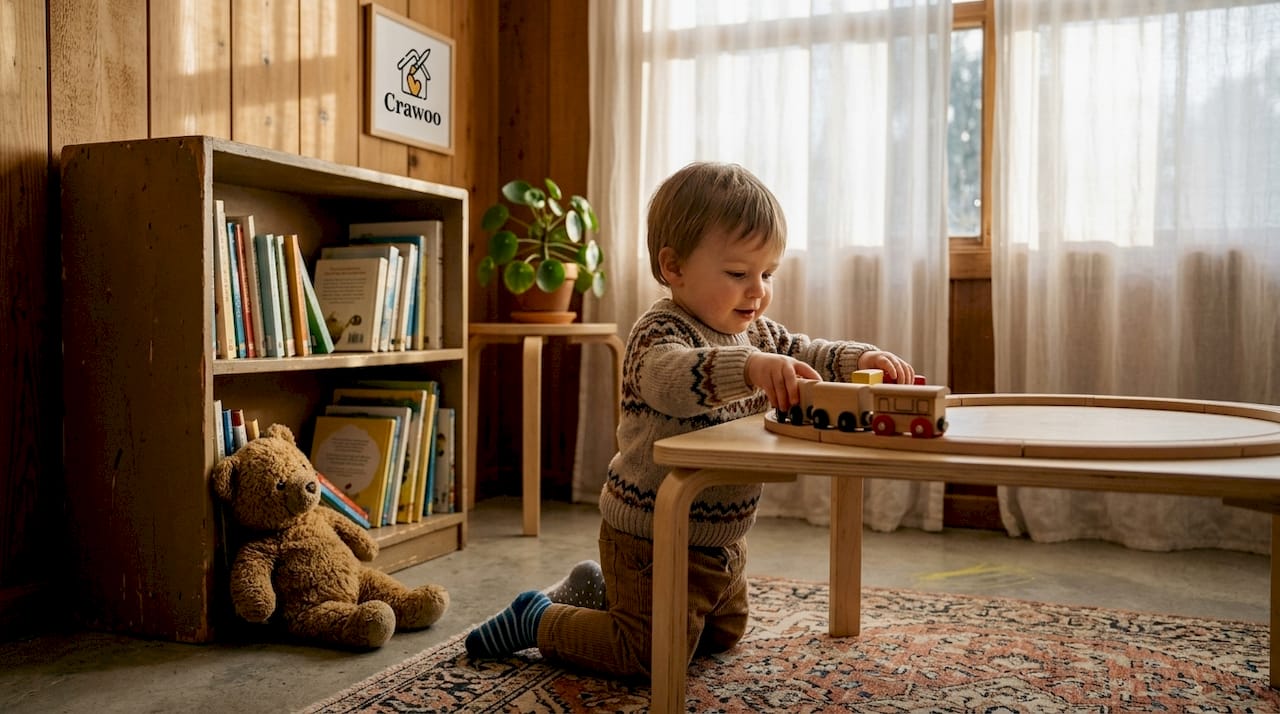
Wood also helps with sound. Wood panels regulate reverberation time in classrooms, improving the acoustic environment for learning. A nursery isn’t a classroom, but the principle applies: hard, reflective surfaces make a room feel harsh and loud, while wood absorbs and diffuses sound in a way that feels gentler.
Here’s how wood affects mood and focus at different stages:
- Newborn stage: Wood’s natural texture and warm tones provide visual softness, which supports calm wakefulness during alert periods.
- 3 to 6 months: As babies begin tracking surfaces and objects, wood grain provides gentle visual complexity without overstimulation.
- 6 to 18 months: Tactile exploration becomes central. Smooth, finished wood surfaces are safe to mouth and touch, unlike painted MDF that can chip.
- Toddler years: Wood-rich rooms feel structured and grounding, which supports focus during play and easier transitions to sleep.
- Preschool age: Children in wood environments show lower stress markers and more positive self-reported mood, consistent with school-based research.
“Wood doesn’t just look warm. It is warm in a measurable, psychological sense — and that warmth has real effects on how children feel and behave in a space.”
For more on how wood decor benefits translate into everyday nursery decisions, and for a room-by-room approach to a toddler room wood decor guide, both resources connect research to practical choices.
Best practices: Creating safe, nurturing wood-based children’s spaces
To put these benefits to work, here are practical ways you can create a space that’s safe, beautiful, and supportive for your child. The goal isn’t to fill the room with wood. It’s to use wood intentionally so it does its job well.
Start with the big pieces. The crib, dresser, and bookshelf are the highest-impact choices because they represent the most surface area and the longest contact time. Choose solid wood or certified low-VOC products for these first.
High wood coverage increases warmth perception but can reduce appeal if materials are mismatched. That’s a real design pitfall. A room that mixes three different wood tones without intention can feel chaotic rather than cozy. Pick one dominant wood tone and treat others as accents.
Here’s a practical checklist for building your wood-based nursery:
- Choose certified solid wood for the crib, changing table, and main storage
- Add a soft area rug under any hard wood floor to cushion falls and add warmth underfoot
- Use convertible furniture like cribs that convert to toddler beds, which extends value and reduces waste
- Balance textures: pair wood with linen, cotton, or wool to soften the room acoustically and visually
- Limit painted wood in areas where babies will chew or mouth, and verify any paint is zero-VOC
- Keep finishes consistent: mixing matte and glossy finishes on different pieces can look unintentional
Pro Tip: If you love the look of white-painted wood furniture, choose pieces where the paint is applied to solid wood rather than MDF. The finish will hold up better, and you won’t expose raw formaldehyde-containing board if a corner chips.
For guidance on blending wood decor styles without creating visual noise, and for the latest nursery wood decor trends that balance safety with style, both are worth bookmarking before you shop.
A fresh perspective on wood in children’s spaces
Most parents come to the nursery design process thinking about aesthetics first and safety second. That’s understandable. But here’s what years of working with families on wood-based nursery spaces has taught us: the parents who get the most out of wood are the ones who treat it as a system, not a style choice.
The research is clear that wood calms children psychologically, reducing stress and mood issues. But that benefit only shows up when wood is used thoughtfully. A single wooden shelf in a room full of plastic doesn’t move the needle. A room where wood is the dominant material, finished safely and combined with soft textiles, creates a genuinely different sensory experience.
The overlooked pitfall is inconsistency. Parents often mix raw pine, stained oak, and white-painted MDF in the same room because each piece seemed fine on its own. The result is visual noise that undercuts the calming effect wood is supposed to deliver. Choosing traditional wood decor insights as a starting framework helps you build a cohesive room rather than a collection of individual purchases. Wood works best when it tells one quiet, consistent story.
Find safe, charming wood decor for your nursery
You’ve done the research. Now the fun part begins.
At Crawoo, every piece is made with parents like you in mind: safe materials, low-VOC finishes, and designs that grow with your child. A custom wooden nursery sign adds a personal touch that no mass-produced decor can match, while a round nursery name sign brings warmth and identity to the space from day one. If you’re building a nature-inspired room, woodland animals nursery decor ties the whole look together beautifully. Each piece is crafted to be as safe as it is charming, so you can focus on enjoying the space you’ve created.
Frequently asked questions
How do I confirm wood furniture is safe for my nursery?
Look for GREENGUARD Gold certification and choose solid wood with non-toxic finishes to minimize off-gassing risks in your baby’s room.
What types of wood are best for durability and safety?
Hardwoods like oak, birch, and maple resist daily wear and pair well with low-VOC finishes, making them the top choices for nursery furniture.
How does wood affect my child’s mood or learning?
Wooden spaces reduce stress and negative mood in children, and wood panels improve room acoustics by regulating reverberation time, which supports a calmer, more focused environment.
Can I combine wood with other materials safely?
Yes, but keep combinations intentional. High wood coverage with mismatched materials can reduce the room’s appeal, so blend wood with soft fabrics like linen or cotton for the best result.
Recommended
Subscribe to Our Newsletter
Leave a comment