


TL;DR:
- Real wood nursery decor enhances warmth, calmness, and sensory development for babies.
- Safe wooden decor requires low-emission, certified hardwoods with non-toxic finishes like GREENGUARD Gold.
- Wooden pieces are durable, timeless, and can be personalized to create a lasting, meaningful nursery environment.
Not all nursery decor creates the same environment for your baby. While plastic and synthetic materials dominate big-box store shelves, real wood offers something fundamentally different: a warmth you can see, feel, and even smell. Wood interiors reduce stress and improve subjective comfort compared to non-wood materials, which means your decor choices genuinely affect how calm and cozy your nursery feels. In this guide, we cover the health benefits, safety considerations, style options, and practical tips you need to choose wooden nursery decor with total confidence.
Table of Contents
- The natural benefits of wooden nursery decor
- Is wooden nursery decor safe? Health, emissions, and material choices
- Designing with wood: Styles, customization, and trends
- How to choose and care for wooden nursery decor
- Our perspective: Why wooden nursery decor stands the test of time
- Ready to add warmth and style to your nursery?
- Frequently asked questions
Key Takeaways
| Point | Details |
|---|---|
| Calming environment | Wooden nursery decor helps reduce stress and creates a cozy, nurturing setting for babies. |
| Safe material choices | Choosing certified hardwoods and non-toxic finishes ensures both style and safety. |
| Timeless style | Wooden decor adapts to growing children and stays beautiful for years to come. |
| Practical for parents | Wood pieces are durable, easy to clean, and can be customized or refreshed as your child grows. |
The natural benefits of wooden nursery decor
With comfort and nostalgia in mind, let’s examine what makes real wood so special for nursery settings.
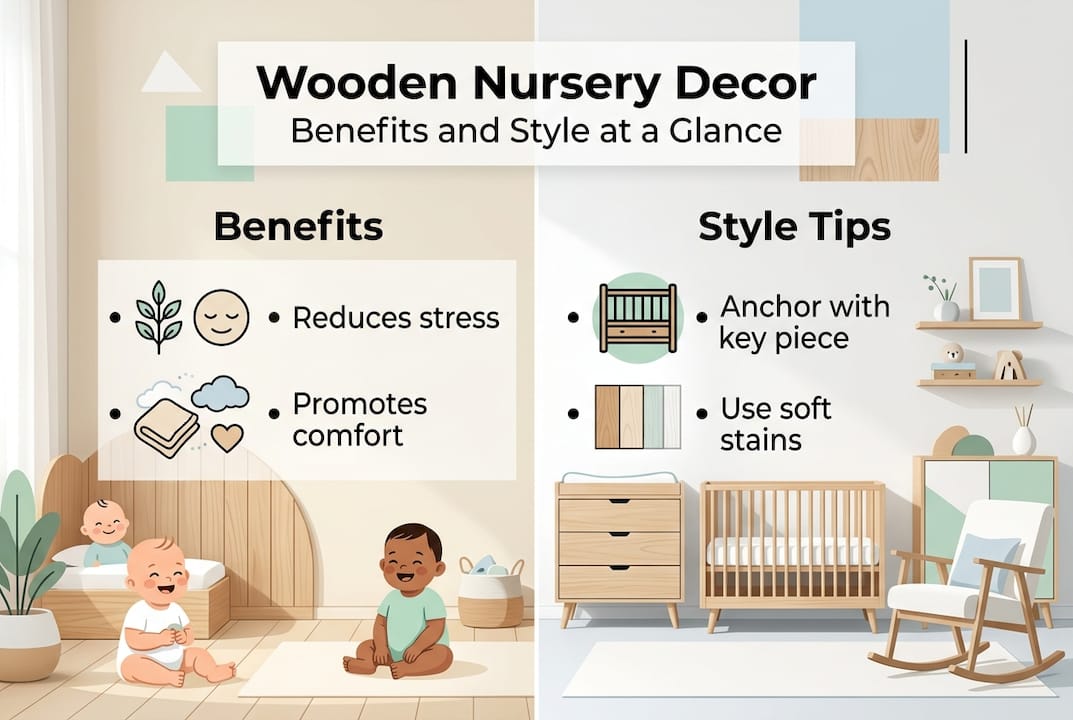
Wood has a way of making a room feel instantly softer. The warm tones, organic grain patterns, and natural textures signal safety and calm in a way that painted MDF or plastic simply cannot replicate. For a newborn whose senses are just waking up, that difference matters more than most parents realize.
Research backs this up. Studies show wood interiors reduce stress, negative moods, and improve subjective comfort compared to non-wood materials. That finding applies to adults and infants alike, which means a wooden name sign or a carved shelf is not just pretty. It is actively contributing to a healthier emotional atmosphere in the room where your baby spends most of their time.
“A nursery built around natural materials gives your baby’s developing senses the richest, most grounding environment possible.”
Wood also engages infant sensory development in unique ways. Babies explore the world through touch and smell long before they understand language. Natural wood grain offers varied tactile feedback, while certain woods carry a faint, clean scent that is far more soothing than the chemical off-gassing common in synthetic furniture. Exploring natural nursery benefits can help you understand exactly how these sensory details shape your baby’s earliest experiences.
Here is a quick look at how wood compares to common nursery decor materials:
| Material | Warmth and comfort | Sensory appeal | Longevity | Eco-friendliness |
|---|---|---|---|---|
| Solid hardwood | Very high | High | Excellent | High (if sustainably sourced) |
| MDF/particleboard | Low | Low | Moderate | Low |
| Plastic | Very low | Low | Low to moderate | Very low |
| Bamboo | High | Moderate | Good | Very high |
The advantages of wood go beyond aesthetics:
- Mood support: Warm tones in the amber and honey range are associated with calm, not stimulation.
- Sleep environment: A quieter, less visually chaotic room supports better infant sleep cycles.
- Parent wellbeing: You spend hours in that nursery too. A space that feels good to you matters.
- Timeless appeal: Unlike trend-driven decor, timeless wooden decor ages gracefully and never looks dated.
Wood is not just a material. It is a mood, a memory, and a foundation for the warmest room in your home.
Is wooden nursery decor safe? Health, emissions, and material choices
After unpacking wood’s warm benefits, safety is often next on new moms’ minds, and here is what you need to know.
The short answer is yes, wooden nursery decor is safe when you choose the right type. But not all wood is created equal, and understanding a few key terms will help you shop with confidence.
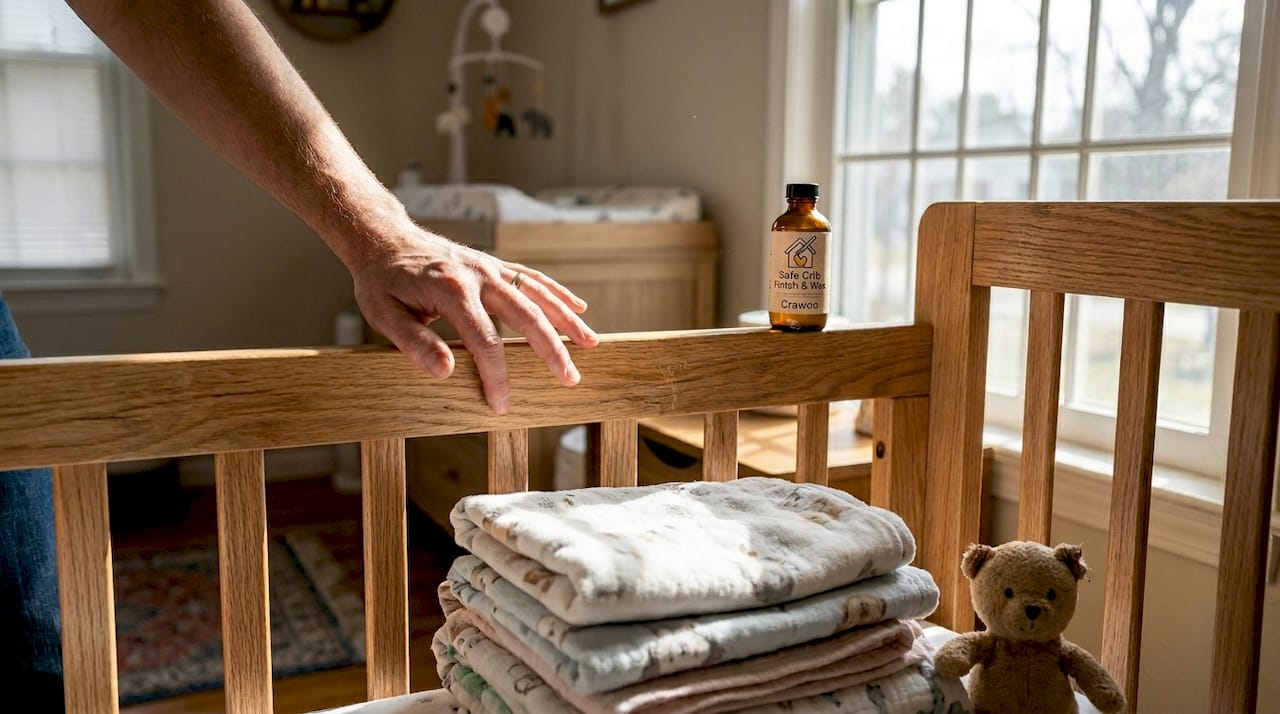
VOCs and terpenes are naturally occurring compounds that some woods release into the air. VOCs stands for volatile organic compounds, and terpenes are a specific type found in wood. Untreated wood can emit terpenes and VOCs depending on species, with pine emitting significantly more than spruce or hardwoods like beech and oak. In a sealed nursery with limited airflow, high-emission woods could affect air quality.
Here is a practical comparison of common nursery woods:
| Wood type | VOC/terpene emissions | Durability | Best use in nursery |
|---|---|---|---|
| Beech | Very low | Excellent | Furniture, name signs, shelves |
| Oak | Low | Excellent | Shelves, frames, accents |
| Maple | Low | Very good | Decorative pieces, signs |
| Pine | Higher | Moderate | Use only if sealed and certified |
| Bamboo | Very low | Good | Lightweight decor items |
For nursery use, always look for these markers of safety:
- GREENGUARD Gold certification: This standard specifically tests for chemical emissions in products used around children and is one of the most trusted certifications for nursery items.
- Non-toxic finishes: Water-based paints and natural oil finishes are far safer than solvent-based lacquers.
- Solid hardwood over composite: MDF and particleboard often use formaldehyde-based adhesives. Solid wood avoids that risk.
- Smooth edges and hardware: Check for rounded corners and recessed or covered hardware to prevent injury.
Pro Tip: If you are buying a custom wooden piece, ask the maker directly what finish they use and whether it meets GREENGUARD Gold or equivalent standards. A reputable maker will answer this without hesitation.
You can find detailed wood decor safety tips that walk through certifications and finish types in plain language. For deeper guidance on what separates quality craftsmanship from shortcuts, nursery craftsmanship standards are worth reviewing before you buy.
Key stat: Products with GREENGUARD Gold certification are tested against more than 360 VOC emissions standards, making them among the most rigorously verified options available for children’s spaces.
Designing with wood: Styles, customization, and trends
Once health and comfort are assured, choosing the right look brings your nursery vision to life.
One of the biggest advantages of wooden decor is how flexible it is. Whether your nursery leans toward soft Scandinavian minimalism, cozy woodland charm, breezy coastal vibes, or warm rustic warmth, wood fits every direction. It is the one material that never fights with your color palette. It works with it.
Popular styles for 2026 nurseries include:
- Scandinavian: Light birch or whitewashed oak tones, clean lines, simple animal silhouettes.
- Woodland: Deep walnut stains, mushroom and fox motifs, layered greenery alongside natural wood shelves.
- Coastal: Driftwood-toned finishes, wave shapes, ocean animals like sea turtles and whales.
- Rustic: Reclaimed-look textures, barn-style frames, warm honey and amber stains.
Customization is where wooden decor truly shines. A personalized name sign carved from solid beech becomes the focal point of the entire room. Animal-themed wall art in layered wood creates depth and visual interest that flat prints simply cannot match. Blending wood styles across a single room, such as a light shelf paired with a darker name sign, adds richness without clutter.
“The most memorable nurseries are not the most expensive ones. They are the ones that feel intentional, personal, and alive with texture.”
Current trends lean toward muted stains rather than bright painted finishes. Think warm greige, soft honey, and natural unfinished looks that let the wood grain speak for itself. Mixed wood tones are also popular, where you combine two complementary shades across different pieces for a layered, collected feel.
Pro Tip: Anchor your nursery with one statement wooden piece, like a custom name sign or a carved animal mobile, and build the rest of the room around its tone. This approach creates cohesion without requiring you to match everything perfectly.
Vintage wooden nursery ideas are also having a major moment, with heirloom-inspired pieces that feel like they have always belonged in the room. When paired with soft linen textiles and a few trailing plants, wood creates a nursery that feels genuinely alive.
Wooden decor also supports your baby’s developing visual system. High contrast and varied textures are more stimulating and developmentally appropriate than flat, uniform surfaces, and natural wood delivers both beautifully.
How to choose and care for wooden nursery decor
Inspired to bring wood into your nursery? Here is how to make informed, future-proof choices.
Buying wooden nursery decor is not complicated, but a few key habits will protect both your investment and your baby’s safety.
Step-by-step buying checklist:
- Verify the wood species: Opt for beech, oak, or maple. Avoid untreated pine or unspecified “wood composite” products.
- Check the finish: Ask for water-based or natural oil finishes. Avoid anything with a strong chemical smell.
- Look for certifications: GREENGUARD Gold is the gold standard. Confirm it applies to the specific product, not just the brand.
- Inspect edges and hardware: Run your hand along all surfaces. No rough spots, sharp corners, or exposed screws.
- Confirm customization process: For personalized pieces, ask how the engraving or painting is done and what materials are used.
Selecting quality, treated hardwoods and maintaining their finishes preserves both the look and safety of your pieces over time.
Care tips to keep wood looking its best:
- Wipe surfaces with a lightly damp cloth. Never soak wood or use abrasive cleaners.
- Keep humidity between 40% and 60% in the nursery. Extreme dryness causes cracking; excess moisture causes warping.
- Reapply a food-safe or child-safe oil finish once a year to maintain the wood’s protective layer.
- Sand and refinish small scratches as your child grows. This is one of wood’s greatest advantages over plastic.
Pro Tip: A small humidifier in the nursery is not just good for your baby’s breathing. It also protects your wooden decor from seasonal cracking, especially during dry winter months.
For parents who love a hands-on approach, DIY nursery wood decor projects can be a rewarding way to add personal touches. If you are focused on storage and display, nursery wood shelf ideas offer practical inspiration for making the most of your wall space.
Common mistakes to avoid: buying softwoods without certification, skipping finish checks, choosing pieces with sharp decorative edges, and purchasing from sellers who cannot verify their materials.
Our perspective: Why wooden nursery decor stands the test of time
Most guides stop at “wood looks nice and feels natural.” We think that undersells the real story.
What we have seen, again and again, is that wooden nursery pieces become the items families keep longest. Not because they are the most expensive, but because they are repairable, adaptable, and emotionally meaningful. A name sign made for a newborn can move to a toddler’s room, then a child’s bedroom, and still feel right at every stage. Plastic decor from the same nursery is usually in a landfill within two years.
There is also something worth saying about the message wooden decor sends to your child over time. Choosing materials that last, that can be refinished and repurposed rather than thrown away, quietly teaches a sustainable mindset. That is not a marketing point. It is a genuine, timelessness of wood that no trend-driven material can replicate.
The heirloom quality of a hand-finished wooden piece is not nostalgia for its own sake. It is a practical, emotional, and environmental investment that keeps paying off long after your baby’s first birthday.
Ready to add warmth and style to your nursery?
If you have been picturing a nursery that feels warm, personal, and built to last, wooden decor is the place to start. Handcrafted pieces made from certified, low-emission hardwoods bring together everything this guide covers: safety, beauty, sensory richness, and lasting value.
Explore our curated collection of artisan-crafted wooden nursery pieces, from a stunning custom ocean nursery decor sign to a classic round nursery name sign that anchors any room beautifully. Every piece is made to order and designed to grow with your child. Browse the full range of options and find your perfect match at our personalized wooden sign page. Ordering is simple, delivery is reliable, and the result is a nursery you will love walking into every single day.
Frequently asked questions
Is wooden nursery decor safe for newborns?
Wooden nursery decor is safe when you choose low-emission, certified hardwoods with non-toxic finishes. Look for GREENGUARD Gold certification to confirm the product meets strict children’s safety standards.
What types of wood are best for nursery decor?
Beech, oak, and maple are the top choices because they are durable, low in emissions, and accept non-toxic finishes without issue. Avoid untreated pine, which emits higher levels of terpenes.
How do I keep wooden nursery decor looking new?
Wipe gently with a damp cloth, avoid harsh chemical cleaners, and reapply a child-safe oil finish once a year. Check surfaces regularly for any wear, splinters, or rough spots.
Does wood decor really help babies sleep or feel comfortable?
Wood surfaces reduce stress and improve comfort in interior spaces for both adults and children, making a wood-rich nursery a genuinely calmer environment for your baby to rest and grow in.
Recommended
Subscribe to Our Newsletter
Leave a comment