


Choosing the first items for your baby’s nursery quickly becomes more than a shopping trip—it is about trust, comfort, and personal touches. For expectant mothers, creating a space that feels both safe and unique matters deeply. Skilled manual techniques in wood décor craftsmanship blend artistry, tradition, and strict safety for newborns, offering you confidence as well as beauty in every handcrafted piece.
Table of Contents
- Defining Wood Décor Craftsmanship for Nurseries
- Types of Wooden Decor and Crafting Methods
- Personalization Techniques and Artistic Value
- Ensuring Safety and Sustainable Wood Choices
- Common Mistakes and How to Avoid Them
Key Takeaways
| Point | Details |
|---|---|
| Craftsmanship Focuses on Safety, Functionality, and Artistic Quality | Handcrafted nursery items emphasize safety standards, daily functionality, and aesthetic value to support a child’s development. |
| Personalization Enhances Meaningful Connection | Custom designs reflect family identity, turning nursery décor into meaningful artifacts that tell your child’s story. |
| Sustainability and Safety Go Hand in Hand | Choosing sustainably sourced, non-toxic materials is essential for ensuring the health of your child and the environment. |
| Avoid Common Mistakes to Ensure Quality | Being aware of pitfalls in selection, such as inaccurate measurements and poor material choices, helps maintain safety and craftsmanship quality. |
Defining Wood Décor Craftsmanship for Nurseries
Wood décor craftsmanship for nurseries goes beyond simple furniture assembly. It represents skilled manual techniques combined with traditional knowledge to create pieces that are beautiful, safe, and functional for your baby’s space.
At its core, craftsmanship means artisans use hand skills, material understanding, and design sensitivity to transform raw wood into nursery pieces. This isn’t about mass production—it’s about creating with intention, care, and expertise.
For nurseries specifically, craftsmanship blends three essential elements:
- Safety first: Every piece meets strict safety standards for infants and toddlers
- Functionality: Designs work seamlessly in your daily routines with your baby
- Artistic quality: The finished piece reflects beauty and cultural identity
Wood décor craftsmanship encompasses artisans’ skillful manipulation of wood to create items reflecting both individual creativity and cultural tradition. When you choose handcrafted pieces, you’re investing in work that connects heritage techniques with contemporary parenting needs.
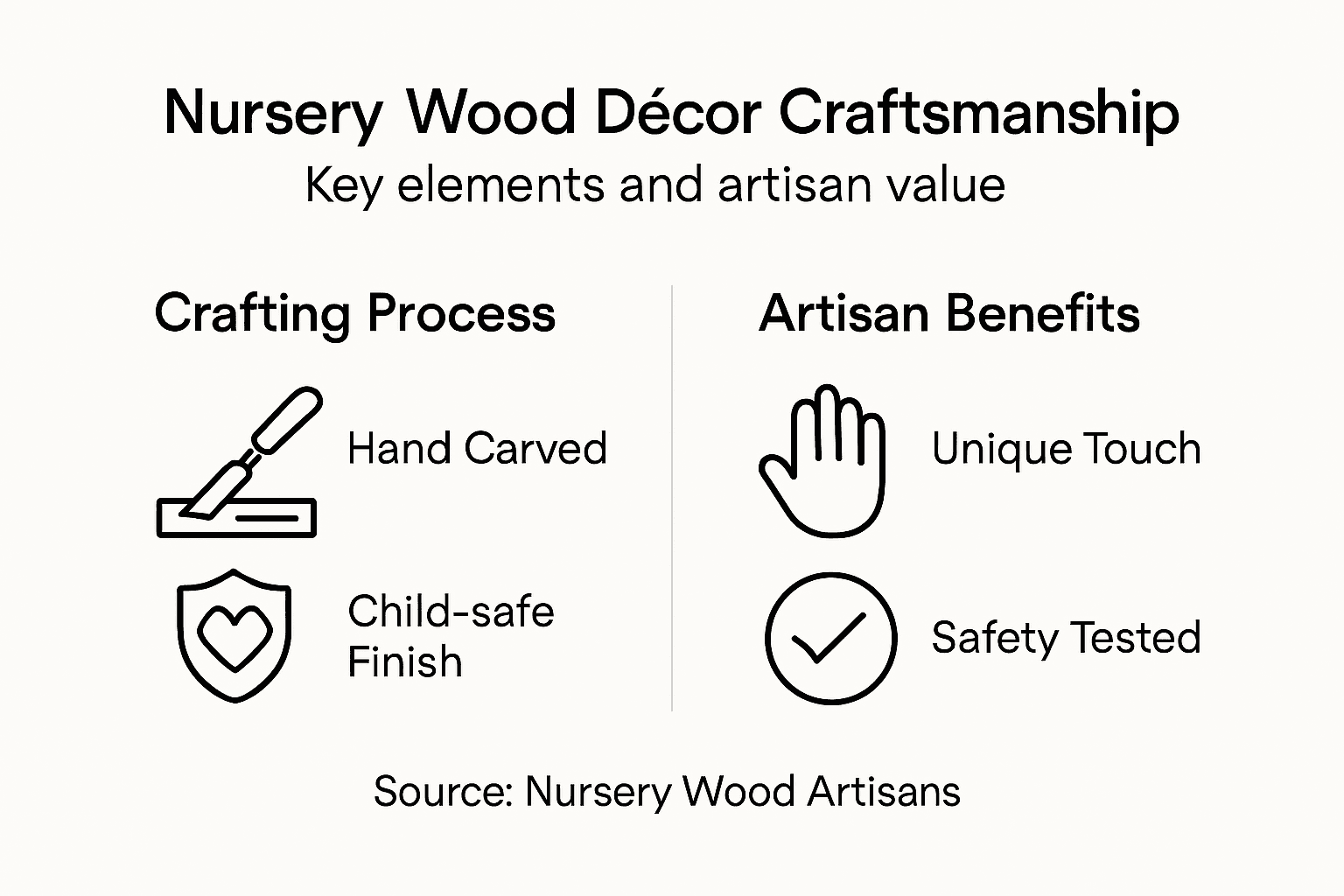
What makes this different from factory-made alternatives? Handcrafted nursery items carry the maker’s individual touch. Each piece reflects decisions about wood selection, finish quality, and design details that support your baby’s development and safety.
Pro tip: When selecting handcrafted pieces, look for artisans who document their process and can explain their safety testing—this transparency shows true craftsmanship commitment.
The heritage of traditional woodworking ensures that each nursery decoration combines proven techniques with modern safety requirements. Your custom pieces aren’t just décor—they’re functional art that supports your baby’s early environment while honoring timeless craftsmanship traditions.
When you understand what craftsmanship truly means, you can make informed choices about the pieces that will surround your growing child.
Here’s a comparison of handcrafted versus factory-made nursery wood décor:
| Aspect | Handcrafted Decor | Factory-Made Decor |
|---|---|---|
| Unique details | Each piece is one-of-a-kind | Uniform, mass-produced |
| Material selection | Artisan-selected, quality wood | Standardized materials |
| Safety focus | Thorough child safety testing | Generic safety compliance |
| Long-term impact | Becomes family heirloom | Likely replaced over time |
| Design flexibility | Customizable for your needs | Limited pre-set options |
Types of Wooden Decor and Crafting Methods
Wooden nursery décor comes in many forms, each created using different techniques. Understanding the options helps you choose pieces that match your style and your baby’s safety needs.
Common types of wooden nursery décor include:
- Carved wooden panels: Hand-carved designs create texture and visual interest on walls
- Inlay work: Different wood tones are fitted together to form patterns and images
- Turned wood items: Spindles, finials, and rounded pieces made on a lathe
- Veneered surfaces: Thin decorative wood layers applied to create unique finishes and colors
Decorative wood veneers allow artisans to create customized textures, colors, and forms that suit your nursery’s soft, natural ambiance without requiring massive pieces of solid wood.
Crafting methods vary depending on the piece. Some artisans use hand carving to shape each detail by hand, while others apply marquetry (intricate wood inlay patterns) or modern techniques like CNC machining for precision.
For nurseries, the focus shifts toward specific methods that prioritize safety. Artisans use solid wood carving, joinery, and turning techniques combined with careful surface finishing to create smooth edges, rounded corners, and secure joints that protect infants and toddlers.
The evolution of woodworking means artisans now blend traditional handwork with modern precision tools. This hybrid approach delivers both the warmth of handcrafted pieces and the consistency that nursery safety requires.
The best nursery pieces combine artisanal character with meticulous attention to child safety through every step of creation.
When selecting wooden décor, look for pieces that show evidence of quality joinery and smooth finishing. Rough edges and weak joints are red flags that signal corners were cut.
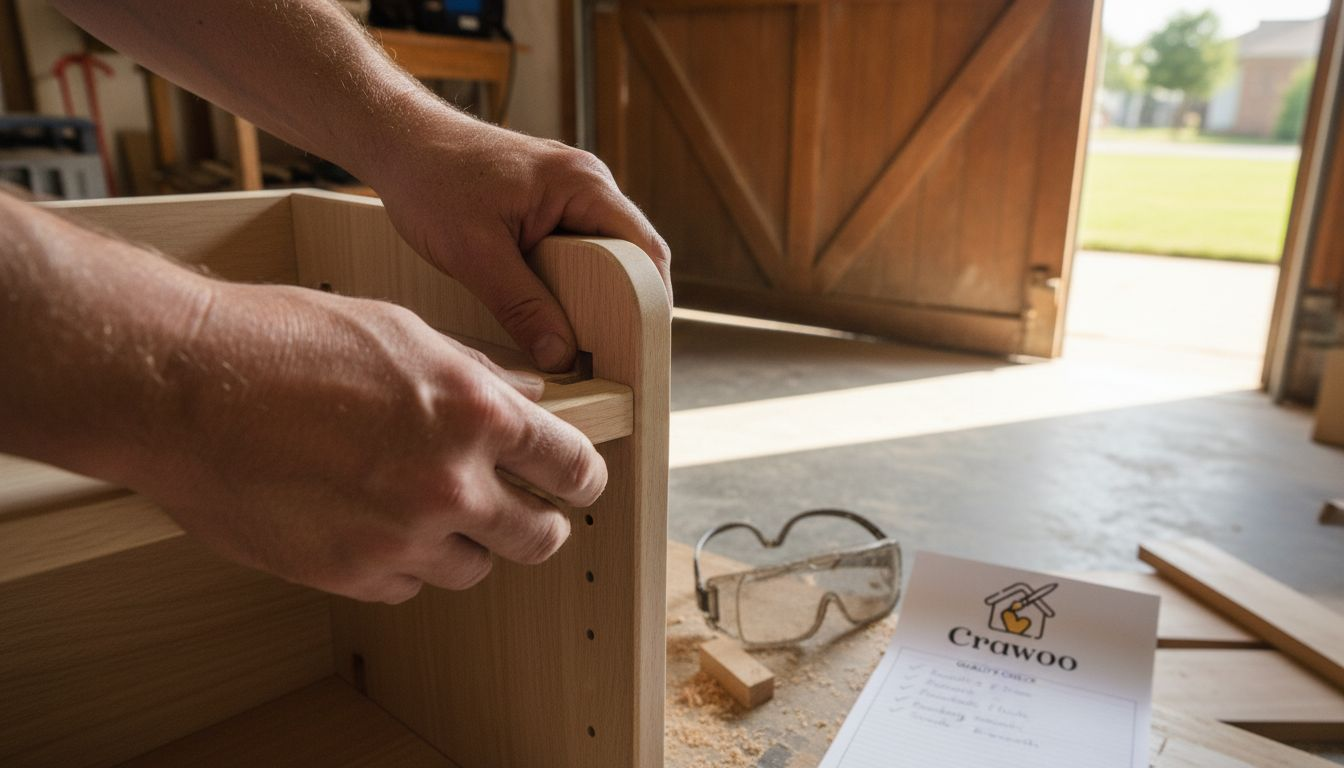
Pro tip: Ask artisans about their finishing process—pieces finished with non-toxic, child-safe stains and sealers are essential for items your baby will touch or mouth.
Personalization Techniques and Artistic Value
Personalization transforms wooden nursery décor from generic pieces into meaningful items that reflect your family’s identity and your baby’s unique story.
Artisans use several techniques to create customized designs:
- Custom carving: Hand-carved names, initials, or meaningful symbols
- Hand-painting: Detailed artwork applied directly to wood surfaces
- Engraving: Precise details etched into the wood for lasting elegance
- UV inkjet printing: Digital precision for intricate color designs and patterns
UV inkjet printing and custom carving enable tailored designs that enhance artistic value while reflecting your individual preferences and nursery theme.
The fusion of traditional craftsmanship with digital printing improves color accuracy and design flexibility. This combination allows artisans to create highly personalized pieces that function beautifully while expressing your vision.
When artisans personalize pieces with your baby’s name, birthdate, or family heritage, they elevate functional furniture into meaningful artifacts. Bespoke carving and surface finishing techniques transform wood into heirloom-quality pieces that can be passed down through generations.
The artistic value goes beyond appearance. Cultural motifs, family names, and nursery-specific themes turn a simple crib or wall hanging into a piece that tells your story.
Personalization creates emotional significance—your child will grow up surrounded by pieces designed specifically for them.
This relationship between the artisan’s skill and the emotional meaning they create makes handcrafted nursery décor deeply personal. Each piece carries the maker’s intention alongside your vision.
Consider what elements matter most to your family. Do you want cultural symbols represented? Your baby’s name featured prominently? A favorite storybook character incorporated into the design? These choices shape both the artistic value and the lasting impact of each piece.
Pro tip: Request mockups or design previews before finalizing personalized pieces—this ensures the design matches your vision and integrates seamlessly with your nursery’s overall aesthetic.
Ensuring Safety and Sustainable Wood Choices
When selecting wooden nursery décor, safety and sustainability go hand in hand. Your choices protect your baby while supporting the planet’s future.
Safety in nursery décor starts with the basics. Look for pieces featuring smooth finishes, rounded edges, and sturdy joinery that prevents injuries. Non-toxic finishes are absolutely critical—your baby will touch, mouth, and interact with these items daily.
Key safety features to verify:
- Non-toxic coatings: Water-based stains and sealers free from harmful chemicals
- Smooth surfaces: No splinters, rough edges, or protruding elements
- Secure joinery: Joints that won’t come loose or collapse under normal use
- Stability: Pieces designed so they won’t tip or shift unexpectedly
Sustainability matters equally. Responsibly sourced timber, reclaimed wood, and rapidly renewable species minimize environmental impact while ensuring your child’s health and the planet’s wellbeing.
Certified woods like FSC-certified timber support forest conservation and ethical harvesting practices. Reclaimed wood offers another excellent option—it reduces waste while adding character and history to your nursery.
Bamboo and other rapidly renewable materials grow quickly and regenerate naturally. These choices reflect a commitment to sustainability without sacrificing quality or beauty.
The best nursery décor combines strict safety standards with sustainable sourcing—protecting both your child and the environment.
When artisans adhere to both safety guidelines and sustainable practices, they’re making ethical choices. This alignment reflects the values of modern wooden décor craftsmanship.
Ask potential artisans about their material sourcing, finishing processes, and safety testing. Transparency here reveals genuine commitment to quality and responsibility.
Pro tip: Request documentation of wood sourcing and finish certifications—legitimate artisans happily provide proof that their materials meet safety standards and sustainability requirements.
Review this overview of sustainable wood options and their benefits:
| Wood Type | Benefit for Nursery Décor | Environmental Advantage |
|---|---|---|
| FSC-certified timber | Proven track record for safety | Supports forest conservation |
| Reclaimed wood | Adds history and character | Reduces landfill waste |
| Bamboo | Naturally smooth and sturdy | Rapidly renewable resource |
| Fast-growing species | Minimal risk of harmful chemicals | Low environmental footprint |
Common Mistakes and How to Avoid Them
When selecting or commissioning wooden nursery décor, understanding common pitfalls helps you make smarter choices and avoid costly errors.
Many artisans and buyers make preventable mistakes that compromise quality, safety, or durability. Being aware of these issues protects your investment and your baby’s wellbeing.
Common mistakes include:
- Inaccurate measurements: Pieces that don’t fit properly in your space
- Improper wood selection: Choosing wood unsuitable for nursery humidity and temperature changes
- Neglecting tool maintenance: Dull tools create rough edges and safety hazards
- Ignoring wood movement: Not accounting for how wood expands and contracts with humidity
- Rushing the process: Cutting corners on precision and double-checking measurements
- Using inappropriate adhesives: Non-toxic glues are essential for baby safety
Tool maintenance, accurate measurements, and proper wood selection are foundational to quality craftsmanship. These basics prevent poorly fitting components, unsafe edges, and weakened structures.
Wood movement due to humidity is a critical consideration often overlooked. If artisans don’t account for wood expansion, joints can crack or pieces can warp over time.
Slow, careful marking and cutting, combined with appropriate non-toxic adhesives and proper clamping, ensure durability and safety in nursery pieces.
When commissioning custom pieces, ask artisans about their process. Do they account for wood movement? Do they double-check measurements? What adhesives do they use?
Quality craftsmanship requires patience, precision, and adherence to strict standards—never speed over safety.
Thorough planning before construction prevents most mistakes. Good artisans spend time understanding your needs, your space, and the materials involved.
Pro tip: Request documentation of testing and quality checks—legitimate artisans keep records showing how they verify safety, measurements, and material quality before delivery.
Elevate Your Nursery with Custom Wood Décor Crafted for Safety and Style
Transforming your baby’s nursery into a warm, safe, and beautiful space requires more than just furniture. It demands expert craftsmanship, careful material selection, and designs that prioritize your child’s well-being while reflecting your personal story. If you appreciate the value of handcrafted pieces that combine non-toxic finishes, thoughtful joinery, and unique personalization techniques, explore how you can bring these elements into your home with ease by discovering Wood Wall Decor Is an Easy Way to Change Your Interior | Crawoo.com.
Choose custom wooden décor designed with your nursery’s needs at heart. Our collection offers artisan-crafted pieces that embrace tradition and safety, making every item a lasting heirloom full of artistic value. Visit Crawoo.com to personalize your nursery with décor that balances function, beauty, and sustainability. Take the next step now to create an environment where your child can thrive surrounded by meaningful craftsmanship.
Frequently Asked Questions
What are the key benefits of handcrafted wooden décor for nurseries?
Handcrafted wooden décor offers unique details, safe non-toxic finishes, and customization options that suit your baby’s developmental needs while adding artistic value to the nursery.
How do I ensure the safety of wooden nursery décor?
To ensure safety, look for pieces with smooth finishes, rounded edges, secure joinery, and non-toxic coatings. Always verify that the decor meets child safety standards.
What type of wood is best for nursery décor?
The best types of wood for nursery décor include FSC-certified timber, reclaimed wood, or bamboo, as they are sustainably sourced and free from harmful chemicals, ensuring both safety and minimal environmental impact.
How can I personalize wooden nursery pieces?
Personalization techniques include custom carving of names, hand-painting designs, engraving details, or using UV inkjet printing to create unique, meaningful items that reflect your family’s identity.
Recommended
Subscribe to Our Newsletter
Leave a comment