


Not all nursery decor is created equal, and the difference shows up fast once a toddler gets involved. Solid hardwood can last over 100 years, while cheaper alternatives chip, warp, or fall apart within a few years of daily use. If you’re choosing decor for a space that needs to be beautiful, safe, and genuinely tough, understanding why wood holds up so well is the smartest place to start. This guide breaks down the real reasons wooden decor outlasts the competition and how to use that knowledge when shopping for your nursery.
Table of Contents
- What makes wooden decor so durable?
- How durability is measured: The Janka scale
- Natural resistance: Why wood lasts across generations
- Life cycle: Strength that improves with age
- Solid hardwood vs engineered wood: The nursery impact
- Caring for wood: Maximizing durability in real nurseries
- Shop long-lasting solid wood decor for your nursery
- Frequently asked questions
Key Takeaways
| Point | Details |
|---|---|
| Superior structure | Wooden decor’s grain and cell design make it highly resistant to daily nursery wear and tear. |
| Measured durability | Janka ratings and natural defenses set hardwoods apart for lasting nursery use. |
| Repair and restore | Solid wood decor can be refinished and passed down, saving money for parents. |
| Safe and sustainable | Wood’s natural resistance reduces biological risks and delivers an eco-friendly, lasting option. |
What makes wooden decor so durable?
Wood isn’t just a pretty material. Its strength comes from a cellular structure that no factory process has fully replicated. Natural hardwoods like oak, maple, and walnut grow with a continuous grain, meaning the fibers run uninterrupted from one end of the board to the other. That structure is what gives solid wood its ability to absorb impact, flex slightly under stress, and spring back without cracking.
Engineered alternatives are made by bonding layers or particles together with adhesives. Over time, those bonds weaken. You get delamination, swelling at the edges, and surfaces that can’t be repaired once damaged. Solid wood simply doesn’t have those failure points.
“Solid wood’s continuous grain structure from natural hardwoods like oak, maple, and walnut provides superior structural integrity.”
This is why timeless nursery decor made from solid hardwood holds up through years of bumps, cleaning, and daily handling. The wood decor craftsmanship behind each piece matters too, but the raw material is where durability starts.
Key durability advantages of solid hardwood:
- Continuous grain resists splitting and cracking
- No adhesive layers to delaminate
- Surfaces can be sanded and refinished
- Naturally handles mechanical stress from daily nursery use
How durability is measured: The Janka scale
Experts don’t just guess at wood hardness. They measure it using the Janka hardness scale, a standardized test that records how much force (in pounds-force, or lbf) it takes to embed a steel ball halfway into a wood sample. The higher the number, the harder the wood and the better it resists dents and wear.
Janka hardness ratings give parents a concrete way to compare materials before buying. Here’s how common nursery-relevant woods stack up:
| Wood species | Janka rating (lbf) | Best use in nursery |
|---|---|---|
| Hard maple | 1,450 | Furniture, shelves, name signs |
| White oak | 1,360 | Wall art, shelving, frames |
| Red oak | 1,290 | Decor pieces, storage |
| Cherry | 950 | Decorative accents |
| Pine | 380 | Light decorative use only |
The gap between maple (1,450 lbf) and pine (380 lbf) is enormous. A pine shelf in a busy nursery will show dents and scratches within months. A maple shelf can take years of toy drops and still look great.
What the Janka scale means for your nursery:
- Choose woods rated above 900 lbf for items that get daily contact
- Maple and oak are the gold standard for making wooden nursery decor that lasts
- Pine works for purely decorative items placed out of reach
- Check ratings before buying any wooden nursery accessories that will be handled frequently
Pro Tip: When shopping for nursery decor, ask the seller what species of wood they use. If they can’t tell you, that’s a red flag. Knowing the species lets you look up the Janka rating and make a confident choice.
Natural resistance: Why wood lasts across generations
Hardness is just one part of the story. Wood’s true preservation power comes from its chemistry. The inner core of a mature hardwood tree, called the heartwood, contains natural compounds that actively resist fungi, insects, and biological decay. This isn’t a coating or treatment. It’s built into the wood itself.
Wood species are formally rated on a natural durability scale from Class 1 (most durable, like teak and iroko) to Class 5 (least durable, like pine and birch). Hardwoods naturally resist biological degradation through heartwood chemicals that are toxic to fungi and insects. For nursery decor, this means less risk of hidden mold growth or structural weakening over time.
Biological resistance isn’t just about longevity. It’s about safety. Decor that resists mold and pests creates a healthier environment for your baby.
Why natural resistance matters for nurseries:
- Reduces risk of mold forming inside cracks or joints
- Protects structural integrity without chemical treatments
- Means lower replacement costs over the years
- Supports safe natural nursery solutions that don’t rely on synthetic preservatives
This is one reason why well-chosen hardwood decor can genuinely be passed from one child to the next without losing its integrity or safety.
Life cycle: Strength that improves with age
Wood’s hidden strength isn’t just in how it’s made. It’s in how it ages alongside your family. Most materials degrade over time. Wood, when properly cared for, can actually get stronger. Research on aged wood samples, including centuries-old Chinese Fir, shows measurable gains in compressive strength and stiffness over long periods. That’s not a marketing claim. It’s documented material science.
This aging process is part of what makes solid wood decor uniquely suited to become a family heirloom. A name sign or wall piece made from quality hardwood today could be something your child keeps for their own nursery someday.
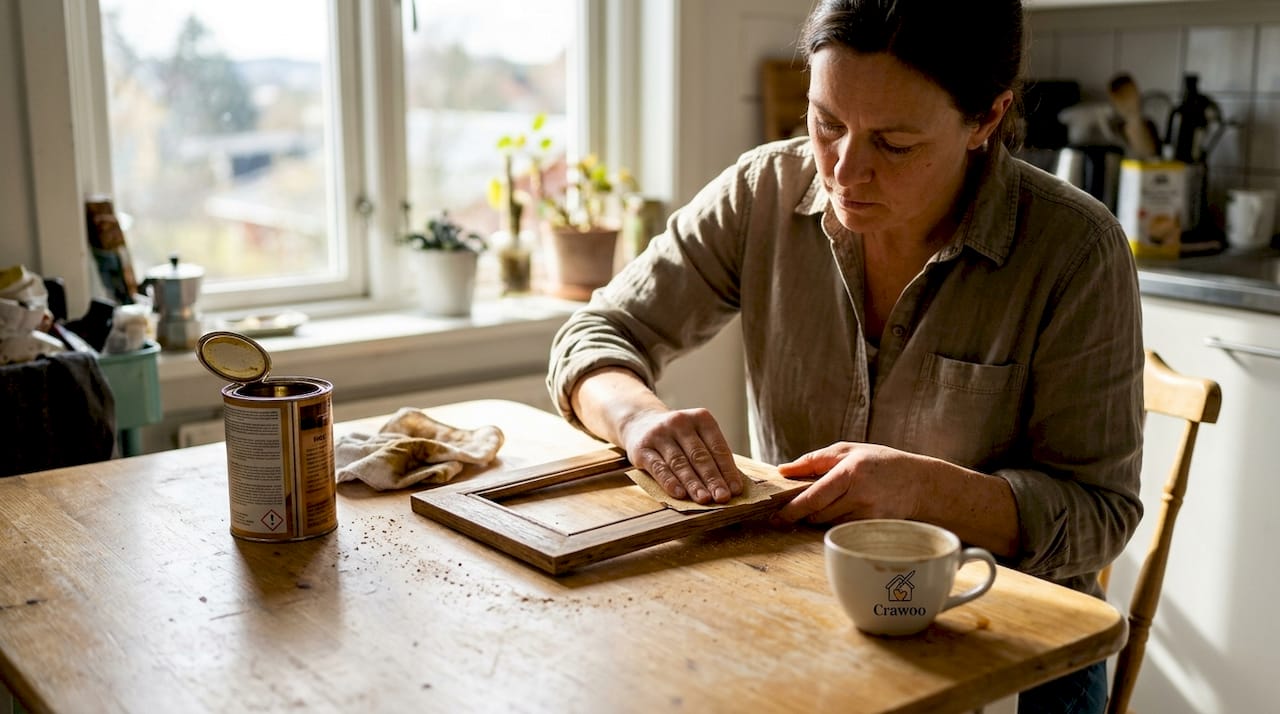
Pro Tip: If a wooden piece gets scratched or worn over the years, don’t replace it. Sand it lightly and apply a fresh coat of non-toxic finish. You’ll restore it to near-original condition in an afternoon, something you simply cannot do with plastic or MDF.
The ability to restore and refinish is a massive practical advantage. Plastic yellows and cracks. Engineered wood chips and swells. Solid hardwood responds to care and keeps going. Explore wooden wall art types that are designed with this long-term thinking in mind.
Solid hardwood vs engineered wood: The nursery impact
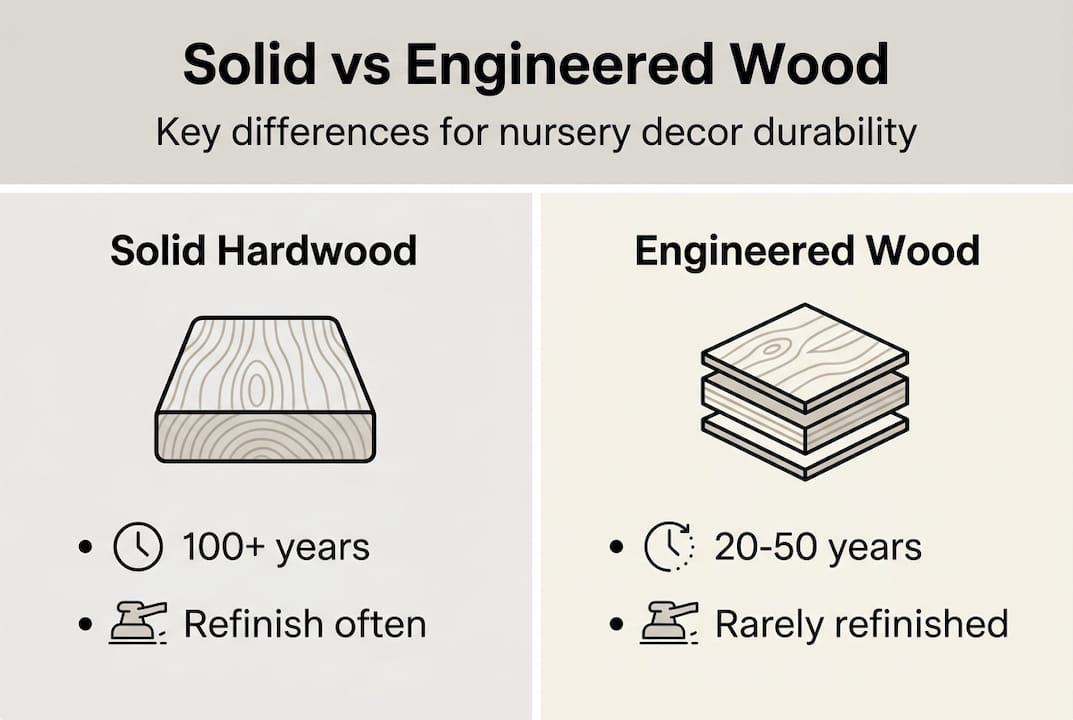
So how do today’s two common material options stack up for your nursery? Let’s compare.
| Feature | Solid hardwood | Engineered wood |
|---|---|---|
| Lifespan | 100+ years | 20-50 years |
| Refinishing | Multiple times | Once or not at all |
| Humidity sensitivity | Moderate (manageable) | Lower sensitivity |
| Chemical content | Minimal | Adhesives and binders |
| Repairability | Excellent | Poor |
| Heirloom potential | High | Low |
Solid hardwood outperforms engineered wood in lifespan, refinishing ability, and suitability for high-traffic nurseries. Engineered wood does have one real advantage: it’s more dimensionally stable in environments with fluctuating humidity. If your nursery has extreme humidity swings, that’s worth considering.
When to choose solid hardwood:
- You plan to pass decor down to future children or grandchildren
- The nursery item will be touched, handled, or bumped regularly
- You want to avoid adhesives and synthetic binders near your baby
- You’re following current wood decor trends toward natural, eco-conscious materials
Pro Tip: For wall art and name signs that won’t face heavy physical contact, either material can work. But for shelves, storage, and anything at a toddler’s reach, solid hardwood is the clear choice. Check out this nursery wood decor maintenance guide to keep either material in top shape.
Caring for wood: Maximizing durability in real nurseries
No matter how durable your decor is, smart care keeps it at peak performance. The good news is that maintaining solid wood in a nursery isn’t complicated. A few consistent habits make a significant difference over the years.
Solid wood is hygroscopic, meaning it absorbs and releases moisture from the air. In a nursery, that means humidity management is your first line of defense against warping or cracking.
How to care for wooden nursery decor:
- Maintain humidity between 40 and 60 percent. Use a humidifier in dry winters and a dehumidifier in humid summers. A simple hygrometer (a device that measures air moisture) costs under $15 and takes the guesswork out of it.
- Apply a non-toxic finish. Water-based polyurethane or natural oils like linseed or tung oil protect the surface from stains and bacteria without introducing harsh chemicals near your baby.
- Clean with a soft, slightly damp cloth. Avoid soaking the wood or using harsh chemical sprays. Wipe dry immediately after cleaning.
- Inspect pieces every few months. Look for small scratches, loose joints, or dull spots. Catching issues early means a quick sand and refinish rather than a full replacement.
Pro Tip: Place a small felt pad under any wooden decor that sits on a shelf or dresser. It prevents scratching the surface beneath and reduces vibration damage from nearby activity.
For more detailed guidance, the practical nursery maintenance tips on our blog cover everything from seasonal care to refinishing steps. You’ll also find specific advice in our wooden shelf decor guide for keeping shelves looking sharp through the toddler years.
Shop long-lasting solid wood decor for your nursery
You now know what makes wood genuinely durable, how to measure it, and how to care for it. The next step is finding pieces that are actually built to those standards. At Crawoo, every piece is handcrafted from solid hardwood, designed with nursery safety in mind, and made to last well beyond the baby years.
Our custom wooden nursery sign is one of our most popular pieces, personalized with your child’s name and built to become a keepsake. For families who love a coastal theme, the custom ocean nursery decor brings a playful, durable touch to any room. And our round nursery name sign offers a timeless shape that fits beautifully in any nursery style. Every piece is eco-friendly, customizable, and made to grow with your family.
Frequently asked questions
What type of wood is best for durable nursery decor?
Hardwoods like maple and oak are the best choice, with Janka ratings of 1,450 and 1,290 lbf respectively, far outperforming softwoods like pine at just 380 lbf.
How do you keep wooden nursery decor from warping?
Keep indoor humidity between 40 and 60 percent and apply a quality finish. Solid wood is hygroscopic, but stable species and proper care prevent most moisture-related issues.
Why is solid wood better than engineered wood for nurseries?
Solid wood lasts over 100 years, can be refinished multiple times, and typically contains fewer synthetic chemicals, making it safer and more practical for long-term nursery use.
Is wooden nursery decor truly eco-friendly?
Yes, when sourced responsibly. Wood is renewable and biodegradable, and a single solid hardwood piece can outlast dozens of plastic or composite alternatives, reducing overall waste significantly.
Recommended
Subscribe to Our Newsletter
Leave a comment