


Many parents worry wooden decor poses safety risks in their baby’s nursery. In reality, custom wood signs crafted with non-toxic finishes are among the safest personalization options available. This guide explains what custom wood signs are, their safety features, design choices, developmental benefits for babies aged 0-2, and how to choose and care for them to create a stylish, secure nursery space your child will love.
Table of Contents
- What Is A Custom Wood Sign? Definition And Purpose
- Material And Safety Considerations For Babies 0-2 Years Old
- Design Trends And Personalization Options
- Educational And Emotional Benefits For Babies
- Installation And Care Instructions
- Common Misconceptions About Custom Wood Signs
- Durability, Keepsake Potential, And Market Trends
- Discover Your Perfect Custom Wood Sign Today
- FAQ
Key takeaways
| Point | Details |
|---|---|
| Safe personalized decor | Custom wood signs use non-toxic finishes meeting ASTM standards, making them safe for newborns and toddlers. |
| Material choices matter | Baltic Birch offers natural grain and durability while MDF provides smooth, cost-effective finishes. |
| Design flexibility | Choose fonts, colors, and shapes matching rustic, modern, or whimsical nursery themes with interactive elements. |
| Developmental benefits | Signs help toddlers recognize their name by age 2, supporting early literacy and emotional identity. |
| Lasting keepsakes | Quality construction ensures signs remain attractive for years, becoming cherished mementos beyond infancy. |
What is a custom wood sign? Definition and purpose
A custom wood sign is a personalized decorative piece typically featuring your child’s name, birth details, or meaningful messages designed specifically for nursery walls. These signs create identity and belonging for children from their earliest days, establishing a sense of place and recognition.
Most signs start as wood blanks cut into various shapes, then finished with custom fonts, colors, and protective coatings. The personalization transforms generic decor into something meaningful that reflects your family’s style and your baby’s unique identity. Parents choose these signs to make nurseries feel intentionally designed rather than mass-produced.
Key features include:
- Fully customizable text, typically your child’s name or special phrases
- Various wood types and finishes suited to different aesthetic preferences
- Size options ranging from compact 12-inch pieces to statement 36-inch displays
- Integration with nursery themes through color and font matching
- Durable construction suitable for years of display
Understanding wood signage terminology helps you make informed choices about materials and finishes. The primary appeal lies in creating a nursery that feels personal from day one, with decor celebrating your child’s arrival in a way generic prints cannot match. These signs add warmth through natural materials while serving as functional name recognition tools as your baby grows.
Beyond decoration, parents value how these signs become conversation pieces during nursery visits and photoshoot backdrops capturing precious newborn moments. The benefits of custom name signs extend into toddlerhood as children begin associating the letters and shapes with their own identity.
Material and safety considerations for babies 0-2 years old
Choosing the right material ensures your custom wood sign remains both beautiful and safe throughout your child’s early years. Wood provides warm aesthetics and eco-friendliness when responsibly sourced, with sustainability reducing environmental impact by up to 40% compared to synthetic alternatives.
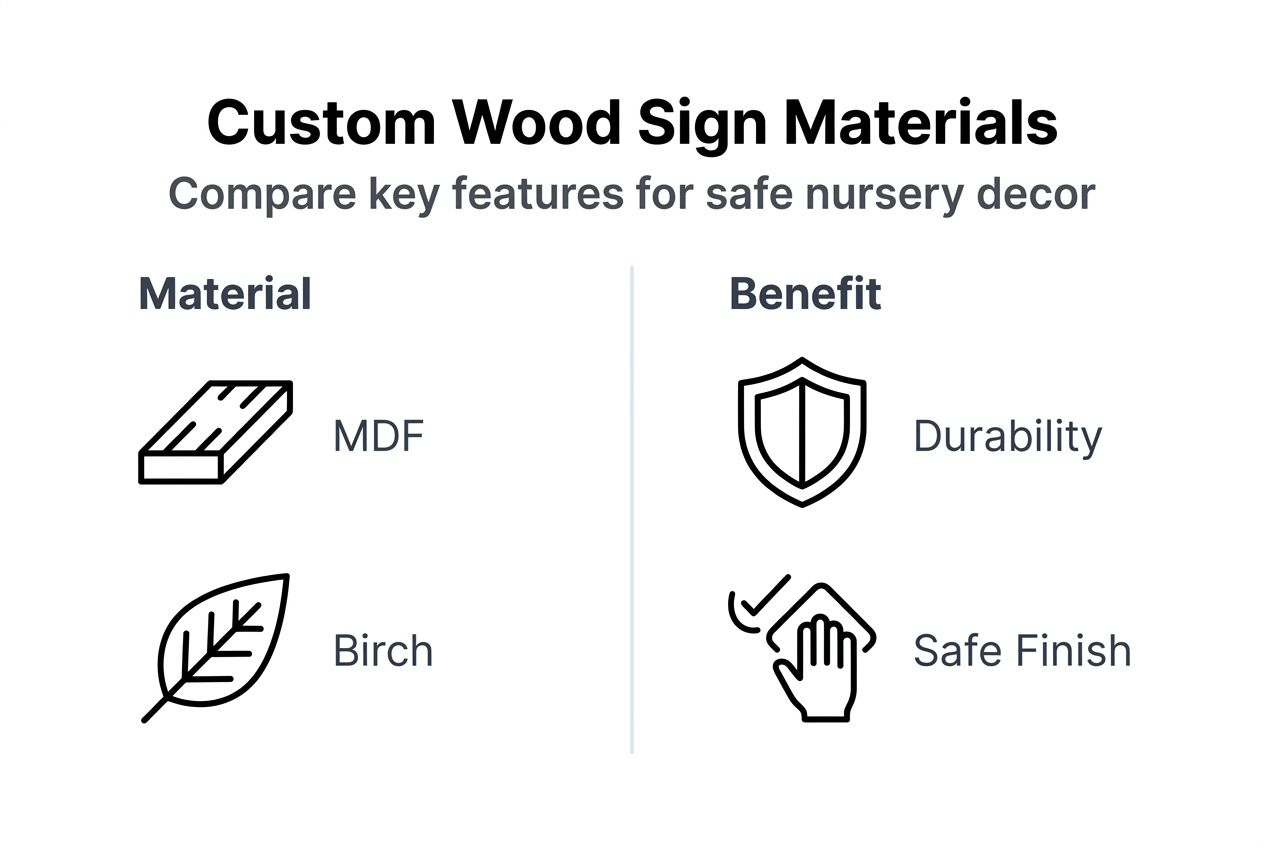
The two most common materials are MDF and Baltic Birch plywood, each offering distinct advantages. MDF provides an ultra-smooth surface ideal for crisp painted finishes and intricate lettering. It’s cost-effective and widely available, making it popular for budget-conscious parents seeking professional results.
Baltic Birch delivers premium durability with visible natural wood grain that adds organic character. Its layered construction resists warping better than standard plywood, ensuring your sign maintains its shape for years. Parents choosing natural or stained finishes prefer Baltic Birch for its authentic wood appearance.

| Material | Finish Quality | Durability | Cost | Best For |
|---|---|---|---|---|
| MDF | Ultra-smooth, paint-ready | Good for indoor use | Budget-friendly | Bold painted designs, intricate fonts |
| Baltic Birch | Natural grain texture | Excellent, warp-resistant | Premium pricing | Stained finishes, rustic themes |
Safety standards matter more than material choice. All finishes and paints must be non-toxic and meet ASTM F963-17 toy safety standards, protecting babies who may touch or mouth surfaces. Verify certifications before purchasing, especially for signs placed within reach of cribs or changing tables.
Quality wood decor craftsmanship includes:
- VOC-free paints and sealers preventing harmful chemical off-gassing
- Rounded edges eliminating sharp corners that could cause injury
- Secure construction with no small detachable parts posing choking hazards
- Water-based finishes safe for babies’ developing respiratory systems
- Third-party testing documentation confirming compliance
Pro Tip: Request material safety data sheets from sellers to confirm non-toxic certifications. Reputable vendors provide this documentation readily, giving you peace of mind about what’s hanging in your baby’s breathing space.
Understanding painting techniques for wooden nursery signs helps you evaluate finish quality when comparing products. Premium signs feature multiple protective coats ensuring colors stay vibrant through years of sunlight exposure and gentle cleaning.
Design trends and personalization options
Current nursery trends embrace personalization that grows with your child while reflecting your family’s aesthetic sensibilities. Signs offer customizable fonts, colors, and shapes that seamlessly integrate with established themes, from farmhouse rustic to minimalist Scandinavian designs.
Popular style categories include:
- Rustic woodgrain finishes with natural stains highlighting material texture
- Modern geometric shapes featuring bold sans-serif fonts and monochromatic palettes
- Whimsical designs incorporating playful elements like clouds, stars, or animals
- Storybook themes with fairy-tale inspired fonts and pastel color schemes
- Interactive layered constructions adding dimensional depth to wall displays
Interactive elements represent an emerging trend, with some signs featuring movable components or textured surfaces engaging babies’ developing sensory awareness. Layered designs create shadow effects adding visual interest as natural light changes throughout the day.
Personalized wooden nursery decor examples demonstrate how parents match signs to existing color schemes. You can select exact paint shades coordinating with bedding, curtains, or accent walls, ensuring cohesive design flow.
Font selection dramatically impacts overall aesthetic. Script fonts convey elegance suitable for traditional nurseries, while bold block letters project modern confidence. Some parents choose mixed typography, pairing their child’s name in decorative script with birth details in clean sans-serif.
Customization extends to size and placement considerations. Statement pieces spanning 30-36 inches serve as focal points above cribs, while smaller 12-15 inch signs work beautifully in gallery wall arrangements. Custom wood wall art can incorporate multiple coordinating pieces creating unified visual stories.
Color psychology influences choices, with soft pastels promoting calm while brighter hues stimulate engagement. Gender-neutral palettes using sage greens, warm grays, and cream tones remain popular as parents move away from traditional pink and blue schemes.
Pro Tip: Choose designs with timeless elements rather than trendy details that may look dated as your child grows. Classic fonts and neutral color bases allow easy room transitions without replacing personalized pieces.
Many vendors offer unique personalized wooden decor featuring additional customization like birth dates, weights, or meaningful coordinates. These details transform simple name signs into comprehensive birth announcements preserving precious memories.
Educational and emotional benefits for babies
Custom wood signs serve purposes beyond decoration, actively supporting your child’s cognitive and emotional development. Wooden nursery signs help toddlers recognize letters and spell their names as early as age 2, providing daily visual exposure that reinforces emerging literacy skills.
Repetitive name exposure builds neural pathways connecting visual symbols to personal identity. Babies as young as 6 months begin distinguishing familiar letter patterns, even before understanding their meaning. By 18-24 months, many toddlers point excitedly at their name sign, demonstrating recognition that these specific shapes represent them.
Developmental advantages include:
- Early letter recognition supporting pre-reading skills before formal education begins
- Name familiarity easing preschool transitions where self-identification becomes important
- Visual anchoring creating emotional security through consistent environmental features
- Language development as parents repeatedly reference the sign during daily interactions
- Ownership feelings fostering self-concept and personal space understanding
Signs become focal points for interactive learning moments. Parents use them while teaching spelling, counting letters, or identifying colors. This transforms passive decor into active educational tools integrated naturally into daily routines.
Emotional attachment develops as children associate their personal space with the comfort and security of their name prominently displayed. This environmental personalization contributes to healthy identity formation during critical early development stages.
“Seeing their name in their own space gives children a sense of belonging and ownership that supports confidence building from infancy through early childhood.”
Many parents report signs becoming treasured keepsakes as children outgrow nurseries. Moving the sign to a big-kid bedroom maintains continuity during transitions, providing familiar comfort during potentially stressful changes. The benefits of custom name signs extend well beyond the infant years, making them worthwhile investments in your child’s environment.
Pro Tip: Incorporate the sign into bedtime routines by spelling out your child’s name together each night. This simple ritual reinforces letter recognition while creating meaningful parent-child bonding moments.
As toddlers develop pointing and verbal skills, they often enthusiastically show visitors their name sign, demonstrating pride in their personalized space. This social interaction supports communication development and self-expression abilities.
Installation and care instructions
Proper installation ensures your custom wood sign remains securely displayed without damaging nursery walls or posing safety risks. Damage-free mounting solutions protect rental properties and make future redecorating effortless.
Recommended installation methods:
- Command adhesive strips rated for appropriate weight, typically 3-5 pounds for standard signs
- Removable adhesive hooks providing secure hold without wall penetration
- Picture hanging strips offering adjustable positioning during installation
- Lightweight wire systems for heavier signs, using existing picture rails when available
- Professional mounting hardware for permanent installations in owned homes
Avoid traditional nails or screws unless absolutely necessary, as these create holes requiring patching and repainting. Modern adhesive technologies provide adequate support for properly sized signs without permanent wall damage.
Ensure secure fastening by:
- Cleaning wall surfaces thoroughly with rubbing alcohol before applying adhesive
- Following manufacturer weight limits and application instructions precisely
- Allowing adhesive to cure for recommended time before hanging sign
- Positioning signs away from cribs, changing tables, or areas where falling could cause injury
- Checking mounting security monthly, especially during first weeks after installation
Maintenance preserves appearance and hygiene in your baby’s space. Clean signs gently using slightly damp microfiber cloths, avoiding excess moisture that could damage finishes. Never use harsh chemicals, ammonia-based cleaners, or abrasive scrubbers that strip protective coatings.
Dust accumulation dulls finishes over time, so incorporate sign cleaning into regular nursery maintenance routines. Wipe surfaces monthly or whenever visible dust appears. Understanding proper painting and finishing techniques helps you recognize quality protective coatings that withstand gentle cleaning.
Pro Tip: Keep installation hardware packaging until you’re satisfied with placement. Most adhesive products allow repositioning within first few minutes, letting you perfect alignment before permanent bonding occurs.
For signs with natural wood finishes, occasional conditioning with furniture polish maintains luster. Apply sparingly to clean cloth rather than directly on sign, buffing gently in direction of wood grain. Sealed painted signs typically need only dusting and occasional damp wiping.
Store signs properly if temporarily removing them during room transitions. Wrap in acid-free tissue paper and store flat in climate-controlled spaces to prevent warping or finish damage.
Common misconceptions about custom wood signs
Several myths persist about wooden nursery signs despite modern manufacturing advances addressing historical concerns. Understanding facts helps you make confident purchasing decisions.
Modern custom wood signs use non-toxic, VOC-free finishes specifically formulated for children’s spaces. Manufacturers follow strict safety protocols ensuring products meet or exceed regulatory standards. Claims that wooden decor poses chemical risks applied to older products using solvent-based finishes no longer common in specialty nursery items.
Mass-produced alternatives lack the emotional connection and customization depth of true custom pieces. While big-box stores offer generic name signs, these typically feature limited font choices, standard sizes, and assembly-line quality control. Custom signs provide unlimited personalization reflecting your exact vision and superior craftsmanship.
Installation difficulty concerns prevent some parents from purchasing wooden signs despite straightforward mounting processes. Damage-free adhesive systems require no tools, drilling, or special skills. Most installations take under 10 minutes from unboxing to wall display.
Key misconception clarifications:
- Safety: Contemporary finishes eliminate toxic chemical concerns completely
- Personalization: True custom work differs dramatically from template-based production
- Installation: Modern mounting eliminates wall damage fears and complexity
- Durability: Proper materials withstand years of display without deterioration
- Value: Custom signs become lasting keepsakes justifying higher initial investment
“Many parents initially hesitate about wooden decor safety, but quality custom signs actually represent one of the safest personalization options when crafted with appropriate non-toxic finishes and secure mounting.”
Weight concerns sometimes deter parents worried about signs falling. Standard nursery signs weigh 1-3 pounds, well within limits of quality adhesive mounting systems. Properly installed signs remain secure through years of display.
Understanding handcrafted sign quality reveals differences between genuine custom work and mass production. Artisan attention to detail ensures superior finishing, precise customization, and quality control impossible in factory settings.
Some parents question whether wooden signs work in rental properties due to installation restrictions. Damage-free mounting makes signs ideal for temporary spaces, leaving walls pristine when removed. This actually gives renters personalization options previously unavailable without risking security deposits.
Cost perceptions sometimes classify custom signs as luxury splurges rather than practical investments. When considering years of use, keepsake value, and developmental benefits, custom signs offer reasonable value comparable to multiple seasonal decor changes providing less lasting impact.
Durability, keepsake potential, and market trends
Quality construction ensures custom wood signs remain attractive throughout nursery years and beyond. Premium materials and protective finishes resist fading, chipping, and warping when properly maintained, delivering lasting value exceeding initial investment.
Baltic Birch construction provides exceptional longevity through its layered structure and natural density. Signs crafted from this material regularly survive multiple children’s nurseries and eventual transitions to playrooms or bedrooms. MDF signs also offer impressive durability when sealed with quality topcoats protecting against moisture and handling.
Many parents view wooden nursery signs as keepsakes holding sentimental value far beyond infancy. These pieces document a specific moment in family history, preserving memories of preparation and anticipation before your child’s arrival. Unlike disposable decor, wooden signs transition through life stages, eventually becoming meaningful gifts when children establish their own homes.
Durability comparison:
| Factor | MDF Signs | Baltic Birch Signs | Vinyl/Paper Alternatives |
|---|---|---|---|
| Average lifespan | 5-8 years | 10+ years | 1-3 years |
| Warp resistance | Moderate | Excellent | Poor |
| Finish durability | Good with sealing | Excellent | Fades quickly |
| Keepsake potential | High | Very high | Low |
Market trends indicate growing demand for personalized nursery decor as parents prioritize meaningful spaces over generic designs. Industry analysis shows 35% annual growth in custom wooden nursery products from 2023 to 2026, reflecting broader shifts toward intentional, sustainable home design.
Innovative designs emerging include:
- Multi-functional pieces incorporating shelving or hooks beyond pure decoration
- Technology integration with QR codes linking to digital baby books or photo galleries
- Modular systems allowing sign updates as children grow without full replacement
- Eco-conscious materials featuring reclaimed wood and plant-based finishes
- Cultural representation through diverse name styling and multilingual options
Longevity factors depend on material selection and finishing techniques. Professional-grade sealers protect against nursery humidity from humidifiers and occasional cleaning moisture. Edge sealing prevents water intrusion that causes swelling or delamination in lower-quality products.
Storage and display conditions affect lifespan significantly. Signs positioned away from direct sunlight maintain color vibrancy longer, while climate-controlled rooms prevent expansion and contraction stresses. These simple environmental considerations extend display life substantially.
Resale and hand-me-down potential exists for quality signs, though most parents keep them as personal mementos. The emotional attachment developed over years of daily viewing makes these pieces difficult to part with, even as children outgrow nurseries.
Investment perspective reveals custom wood signs cost less per year of use than frequently replaced generic decor. A $75 sign lasting 10 years costs $7.50 annually, comparing favorably to seasonal items requiring regular updates. This practical value combines with emotional significance creating compelling overall worth.
Discover your perfect custom wood sign today
Creating a personalized nursery space becomes effortless when you explore thoughtfully crafted wooden signs designed specifically for safety, style, and lasting value. Our wooden sign collection features diverse designs matching rustic, modern, and whimsical themes, all made with non-toxic finishes meeting strict safety standards.
Each piece reflects expert craftsmanship ensuring durability through your child’s early years and beyond. Whether you prefer natural Baltic Birch showcasing beautiful wood grain or smooth MDF perfect for bold painted designs, you’ll find options suiting your exact vision. Our custom wooden nursery sign selections allow complete font, color, and size customization, while specialty pieces like our round nursery name sign offer unique geometric appeal.
Every sign includes damage-free mounting solutions protecting your walls and simplified installation requiring no special tools. Start creating your baby’s special space today with personalized decor that grows in meaning as your child discovers their name and identity.
FAQ
Are custom wood signs safe for newborn nurseries?
Yes, modern custom wood signs use non-toxic paints and finishes specifically approved for children’s environments. Look for products meeting ASTM F963-17 safety standards and featuring VOC-free sealers. Reputable sellers provide safety documentation confirming compliance.
How can I install a custom wood sign without damaging nursery walls?
Use damage-free adhesive strips or removable hooks designed for lightweight decor, typically supporting 3-5 pounds. These products bond securely to walls without nails or screws, leaving surfaces pristine when removed. Clean walls with rubbing alcohol before applying adhesive for best results.
Can I personalize the design to match my nursery theme?
Absolutely, custom signs offer unlimited font, color, and shape choices tailored to rustic, modern, whimsical, or themed nurseries. Many designs include interactive or layered features adding dimensional depth. Work with sellers to match exact paint colors coordinating with your existing decor.
Are custom wood signs durable enough to keep for years?
Quality materials like Baltic Birch and properly sealed MDF ensure signs remain attractive for 10+ years with basic care. Professional finishes resist fading and damage from normal nursery conditions. Many parents treasure these signs as keepsakes, moving them to big-kid rooms and eventually gifting them when children grow.
What’s the difference between MDF and Baltic Birch for nursery signs?
MDF provides ultra-smooth surfaces ideal for painted designs and intricate fonts at budget-friendly prices. Baltic Birch offers natural wood grain, superior warp resistance, and premium durability at higher cost. Both materials work beautifully when finished with non-toxic, child-safe coatings meeting safety standards.
Recommended
Subscribe to Our Newsletter
Leave a comment