


Every parent faces the challenge of turning an empty room into a nurturing space that truly feels like home for their baby. The world of nursery decor can feel confusing when so many options promise both beauty and safety. Understanding what wood signage means in nursery settings helps you choose pieces that are not only beautiful but also safe and durable. Discover how personalized expressions made from natural materials bring warmth and meaning to every corner of your child’s first room.
Table of Contents
- What Wood Signage Means in Nursery Decor
- Common Types and Styles of Wood Signs
- Essential Materials, Finishes, and Safety Standards
- Popular Customization Features and How They Work
- Key Pitfalls Parents Should Avoid When Ordering
Key Takeaways
| Point | Details |
|---|---|
| Personalization Enhances Identity | Custom wooden signs celebrate your child’s name and milestones, fostering a sense of belonging from day one. |
| Durability Over Time | Wooden signs are long-lasting keepsakes that withstand wear, making them ideal for families with multiple children. |
| Variety of Styles | Numerous styles, from minimalist to whimsical, allow parents to match the sign’s aesthetic with their nursery decor. |
| Safety Standards Matter | Choose wooden signs with non-toxic finishes and verified safety compliance to ensure a healthy environment for your baby. |
What Wood Signage Means in Nursery Decor
Wood signage in nursery spaces goes far beyond decoration. These carefully crafted pieces serve as personalized expressions of your child’s identity while creating a warm, welcoming environment that grows with them.
At its core, wood signage functions in multiple ways:
- Personalization: Custom wooden signs celebrate your baby’s name, milestone moments, and unique story
- Thematic storytelling: Wooden pieces complement your nursery’s color scheme, style, and overall design vision
- Durability: Unlike paper or plastic alternatives, wood weathers beautifully and lasts through multiple children
- Warmth: Natural wood tones create a calming atmosphere that synthetic materials simply can’t match
Wooden signs provide clear visual anchors in nursery spaces, helping establish focal points and drawing attention to special areas like changing stations or reading corners.
How Wooden Signs Transform Your Nursery
Nursery wooden name signs are available in countless styles to match your vision. Whether you prefer minimalist lettering, circular designs, or bohemian macrame-inspired pieces, there’s a wooden sign that reflects your parenting style.
The personalization aspect matters deeply. When your child sees their name displayed beautifully in wood, it reinforces belonging and identity from day one. This goes beyond decoration—it’s about creating a space that celebrates who they are.
Wood’s natural aesthetic blends seamlessly with virtually any nursery theme. Soft pastels, gender-neutral designs, storybook inspirations, nature themes—wooden signage adapts and enhances without feeling forced or trendy.
Wooden signs create lasting memories because they’re built to endure, becoming keepsakes that grow with your family.
Many parents discover that quality wooden signage becomes their favorite nursery investment. It’s visible in every photo, meaningful in ways plastic alternatives never achieve, and beautiful enough to repurpose for future children or display in family spaces for years to come.
Pro tip: Choose wooden signs with finishes rated safe for nurseries, ensuring they’re non-toxic and free from harmful chemicals that could affect your baby’s health.
Common Types and Styles of Wood Signs
Wood signs for nurseries come in numerous styles, each bringing its own character and charm to your space. Understanding the different types helps you choose pieces that match your vision and complement your existing decor.
Here are the main categories you’ll encounter:
- Name signs: Personalized with your child’s name in various fonts and finishes
- Milestone markers: Track growth phases with “Baby’s First Year” or month markers
- Themed decorative signs: Feature animals, celestial designs, woodland creatures, or storybook characters
- Wall quotes and affirmations: Inspirational messages that create a calm, nurturing atmosphere
- Functional signs: Label areas like “Diaper Station,” “Reading Nook,” or “Sleepy Time”
Style Categories That Dominate Nurseries
Modern minimalist designs appeal to parents seeking clean lines and neutral palettes. These wooden signs typically feature simple lettering without ornate details, creating timeless pieces that adapt as your child grows.
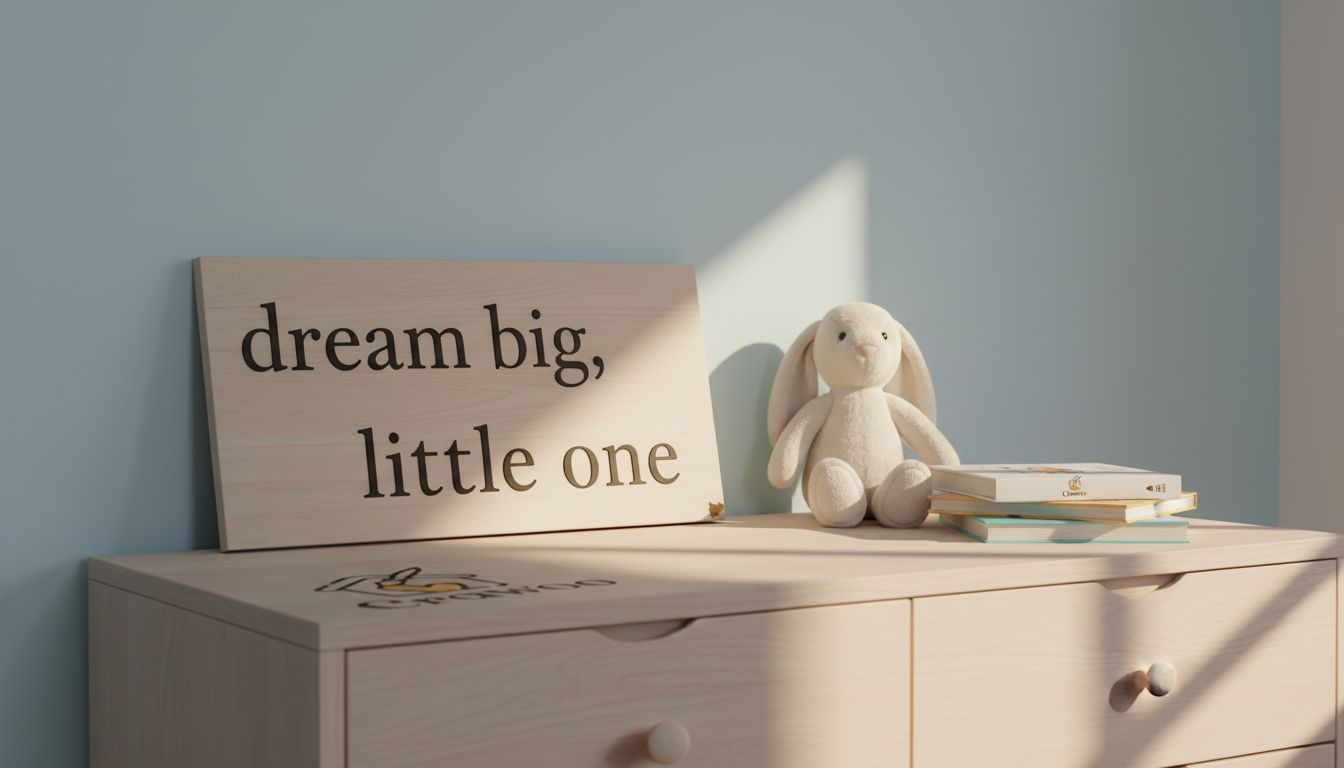
Bohemian and macrame-inspired styles add texture and warmth. These signs often incorporate natural fibers, hanging elements, and earthy tones that feel organic and handcrafted.
Vintage or rustic signs embrace weathered finishes and distressed wood textures. They work beautifully in farmhouse-themed nurseries and create an heirloom quality that ages gracefully.
Whimsical and playful designs feature bright colors, rounded letters, and fun illustrations. These appeal to parents who want their nurseries to feel joyful and celebratory rather than serene.
The best wood sign style is one that genuinely reflects your parenting style and makes you smile every time you walk into the nursery.
Natural wood finishes showcase the grain and beauty of the material itself. Stained options range from light honey tones to deep walnut, while painted finishes offer endless color possibilities that coordinate with your nursery palette.
Size matters when selecting wood signs. Large statement pieces work as focal points above the crib or dresser, while smaller signs can be grouped to create gallery-style arrangements on a single wall.
Pro tip: Choose a style that complements your nursery’s existing furniture and color scheme rather than standing out as a standalone piece, creating a cohesive, professionally designed space.
Here’s a quick reference comparing popular wood sign styles for nurseries:
| Style Type | Main Visual Traits | Best For | Coordinating Decor |
|---|---|---|---|
| Minimalist | Clean lines, neutral colors | Modern, timeless nurseries | Scandinavian, modern |
| Bohemian/Macrame | Textured, natural fibers | Warm, organic looks | Boho, earthy feeling |
| Vintage/Rustic | Distressed, weathered finishes | Farmhouse, heritage themes | Antique decor |
| Whimsical/Playful | Bright colors, playful graphics | Joyful, celebratory spaces | Storybook, nursery themes |
| Natural Wood | Visible wood grain, stains | Versatile, classic designs | Any color palette |
Essential Materials, Finishes, and Safety Standards
When selecting wooden signs for your nursery, understanding materials and safety standards becomes non-negotiable. Your baby’s health and safety depend on choosing pieces made with appropriate finishes and compliant construction.
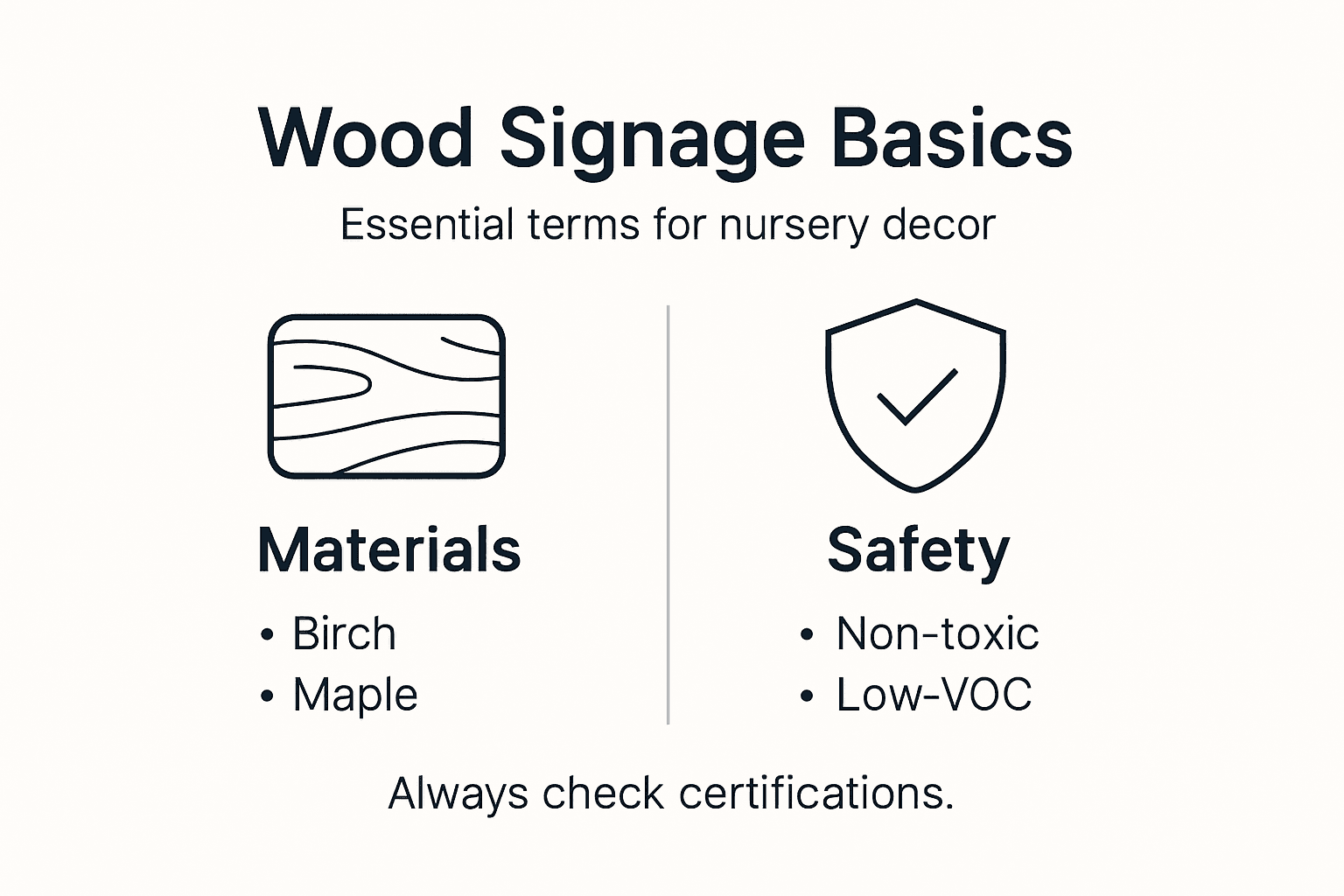
The wood itself matters significantly. High-quality nursery signs use hardwoods like birch, maple, or beech that resist warping and withstand humidity from daily nursery activities. Softwoods absorb moisture more easily, leading to swelling and deterioration over time.
Materials That Keep Your Baby Safe
Nursery wood signs must feature non-toxic, fire-retardant finishes that meet safety regulations. This means the paints, stains, and protective coatings used won’t off-gas harmful chemicals into your nursery air.
Look for finishes that are:
- Low-VOC or zero-VOC: Minimize volatile organic compounds that affect indoor air quality
- Lead-free: Especially important for pieces your child might touch or mouth
- Water-based: Often gentler alternatives to solvent-based products
- Non-toxic sealants: Protect the wood while remaining baby-safe
Many manufacturers now use eco-friendly finishes derived from plant-based sources. These perform equally well while reducing your family’s chemical exposure.
Understanding Safety Compliance
Quality wooden signs adhere to established safety standards that guide material selection, durability requirements, and proper installation practices. These standards ensure signs remain secure and don’t pose hazards as your child grows.
When shopping, ask sellers about their compliance certifications. Reputable makers willingly share documentation proving their products meet safety requirements.
Safe nursery decor starts with transparency—sellers who willingly discuss their materials and certifications are worth trusting.
Durable finishes protect both the wood and your investment. UV-protective coatings prevent fading from natural light, while weatherproof sealants resist moisture damage from humidifiers or occasional spills.
Mounting hardware deserves equal attention. Wooden signs should use heavy-duty, secure fasteners that won’t loosen over time, especially as your child becomes a curious toddler.
Pro tip: Request safety data sheets and material certifications before purchasing, especially if your child has sensitivities or allergies, ensuring complete peace of mind about what enters your nursery.
Before you order a custom wooden sign, compare these key materials and finish options:
| Material/Finish | Main Advantage | Potential Drawback | Best Use Case |
|---|---|---|---|
| Hardwood (birch, maple) | Durable and moisture-resistant | More expensive | Long-lasting nursery decor |
| Softwood | Lower cost, easier to shape | Warps in humidity | Temporary or lightweight signs |
| Natural Finish | Highlights wood’s beauty | Needs more upkeep | Classic, timeless look |
| Painted Finish | Custom color matching | May chip if low quality | Themed or color-driven designs |
| Water-based Sealant | Safe for babies, low odor | Less durable than oil-based | Safety-conscious households |
Popular Customization Features and How They Work
Customization transforms a basic wooden sign into a deeply personal nursery piece that tells your child’s story. Modern manufacturing techniques make it possible to create intricate designs that would be impossible to achieve by hand.
How Modern Customization Works
Laser cutting technology enables precise, detailed designs that capture everything from your child’s name to elaborate graphic elements. This process burns patterns directly into the wood with millimeter accuracy, creating crisp edges and consistent results.
Customization options typically include:
- Shape flexibility: Move beyond rectangles to create custom silhouettes matching your nursery theme
- Font variety: Choose from hundreds of fonts or request custom lettering that matches your decor style
- Monograms and initials: Layer multiple letters for personalized combinations
- Graphic elements: Add animals, celestial designs, or thematic illustrations
- Color options: Select from natural wood, stained finishes, or painted colors
These features work together seamlessly. You might combine a custom animal shape with your child’s name in your chosen font, all finished in a coordinating paint color.
Finish Options That Define Your Sign
Finish choices dramatically affect both appearance and durability. Natural wood finishes showcase grain patterns beautifully but require regular maintenance. Stained finishes deepen the wood tone while still revealing texture underneath.
Painted finishes offer maximum color control and hide wood imperfections. They’re especially popular in themed nurseries where coordinating colors matter. Protective sealants preserve any finish you choose while adding durability against humidity and dust.
The perfect customized sign balances your vision for the space with practical durability that survives daily nursery life.
Size customization matters too. A small accent sign works differently than a large focal piece. Most makers offer multiple size options to fit your wall space and design vision.
Personalization depth varies between makers. Some offer basic options, while others allow complete creative freedom through design consultations. The more control you want, the more you should discuss your vision before ordering.
Pro tip: Provide clear inspiration images and a detailed description of your nursery’s colors and style when ordering, helping makers deliver exactly what you’re envisioning for your space.
Key Pitfalls Parents Should Avoid When Ordering
Ordering custom wooden signs feels exciting until something goes wrong. Understanding common mistakes helps you avoid costly errors and disappointment when your sign arrives.
The biggest mistake? Not double-checking details before finalizing your order. Spelling errors, font choices that don’t match your vision, and design elements that looked good digitally but clash with your actual nursery colors happen more often than you’d think.
Mistakes That Cost Time and Money
Poor design choices and material quality issues rank among the most common regrets parents experience. These problems could have been prevented with better planning.
Avoid these ordering pitfalls:
- Skipping the preview step: Request mockups showing exactly how your sign will look before production begins
- Ignoring placement: Measure your wall space carefully and visualize the sign’s actual size in the room
- Overlooking contrast: Ensure text color contrasts clearly with the background for readability
- Rushing the decision: Take time to verify spelling, fonts, and colors match your vision
- Choosing inappropriate materials: Select wood and finishes suited to your nursery’s humidity and temperature
Many parents rush through customization options without considering how their choices work together. That trendy font might look beautiful on screen but become hard to read at a distance.
Planning Prevents Problems
Having a clear purpose and vision before ordering makes everything smoother. Are you creating a focal point above the crib? A subtle accent? A functional label? Your answer shapes every decision that follows.
Be specific about your nursery style and color palette. Show makers reference images and paint samples. Vague descriptions lead to mismatched results that disappoint you both.
Parents who provide detailed communication and clear reference materials receive signs that exceed expectations.
Trust your maker’s expertise too. While your input matters tremendously, experienced craftspeople spot design problems you might miss. Listen if they suggest adjustments for better readability or durability.
Future-proofing your sign prevents regrets later. Will this design still work as your child grows? Can you adapt it for a sibling’s room? Thinking beyond the infant stage saves money and waste.
Pro tip: Request a detailed design mockup before production, comparing it side-by-side with your nursery photos to ensure the sign’s size, color, and style integrate perfectly into your actual space.
Discover the Perfect Wood Sign for Your Nursery
Choosing the right wood signage for your nursery can feel overwhelming with so many styles, materials, and customization options to consider. You want a sign that not only personalizes your child’s space but also meets important safety and durability standards. Key terms like “milestone markers”, “finish options”, and “non-toxic sealants” are essential to understand for making an informed decision that lasts.
Take the guesswork out of nursery decor by exploring our high-quality Wood Sign Wall Decor of the High Quality from Crawoo.com collection.
Ready to bring a customized, safe, and beautiful wooden sign into your nursery? Visit https://crawoo.com now to find styles that fit your vision and give your little one a space that truly feels like home. Don’t miss the chance to create a meaningful keepsake that grows along with your child. Check out our Buy Wood Signs for Home: Best Items to Brighten Up Your Living Spac… page for even more inspiration and ideas.
Frequently Asked Questions
What are the benefits of using wood signage in nursery decor?
Wood signage offers personalization, thematic storytelling, durability, and warmth. It creates a welcoming environment and celebrates your child’s identity while lasting through multiple children.
How do I choose the right style of wooden sign for my nursery?
Consider your nursery’s overall theme and color scheme. Styles range from modern minimalist to bohemian, vintage, or whimsical, allowing you to select a sign that reflects your parenting style and matches your existing decor.
What materials should I look for in wooden signs for nurseries?
Choose high-quality hardwoods like birch, maple, or beech that resist warping. Ensure finishes are non-toxic, low-VOC, and compliant with safety standards to protect your baby’s health.
How can I ensure the safety of wooden signs in my nursery?
Prioritize wooden signs that feature non-toxic, fire-retardant finishes, sturdy mounting hardware, and adhere to established safety standards. Always request safety certifications from manufacturers to guarantee quality.
Recommended
Subscribe to Our Newsletter
Leave a comment