


TL;DR:
- Choosing heirloom materials like wood and acrylic ensures nursery signs remain stylish and durable over time.
- Trend-focused signs may quickly feel outdated; investing in personalized, meaningful pieces offers lasting value.
- Customization options such as family motifs, birth stats, and symbolic designs reflect personal values and add emotional depth.
Personalizing your baby’s nursery with a sign sounds simple until you’re staring at hundreds of options online, unsure which one will actually feel special years from now. A nursery sign is often the first piece of decor that makes a room feel truly yours, yet most parents settle for whatever is trending rather than what genuinely reflects their family. This guide walks you through the criteria that matter, the most creative options available in 2026, and how to customize a sign that grows with your child. By the end, you’ll have a clear, confident plan for choosing a piece you’ll love long after the baby years are over.
Table of Contents
- What to consider when choosing a nursery sign
- Top unique nursery sign ideas for 2026
- How to customize your nursery sign for maximum personality
- Comparison of top nursery sign materials and styles
- A fresh perspective: Why trend-proof signs matter more than ever
- Bring your nursery sign vision to life
- Frequently asked questions
Key Takeaways
| Point | Details |
|---|---|
| Define your criteria | Decide on material, safety, size, and how personal you want your sign to feel before you start shopping. |
| Mix and match ideas | Combine different sign types and personal touches to create a look that’s truly one-of-a-kind for your baby’s room. |
| Choose quality over trends | Select signs made from heirloom materials like wood or acrylic to ensure lasting style and durability. |
| Personalization goes beyond names | Try initials, family mottos, special colors, or motif-driven designs for a deeply meaningful nursery sign. |
What to consider when choosing a nursery sign
Before you fall in love with a specific style, it helps to set a few ground rules for what you actually need. A nursery sign is not just wall art. It is often the first thing guests notice and the last thing you see before turning out the light.
Start with size and placement. A large wood cut-out above a crib creates a dramatic focal point, while a smaller sign on a shelf adds a quieter personal touch. Measure your wall space before ordering and consider how the sign will interact with other decor elements like mobiles, shelves, and curtains.
Next, think about material and longevity. The 2026 nursery trends shift toward heirloom materials and bold, mood-driven colors, moving away from the disposable, fast-decor mindset of earlier years. Wood and acrylic are leading this shift because both hold up well over time and suit a wide range of design styles. A custom wooden nursery sign can transition from a baby’s room to a toddler’s space without looking out of place.
Here are the key criteria to evaluate before buying:
- Safety: Lightweight materials are safest, especially for anything hung near the crib
- Ease of cleaning: Sealed wood and acrylic wipe clean easily, while fabric options require more care
- Theme alignment: Match the sign’s style to your overall room concept, whether that’s a farmhouse nursery sign aesthetic or a modern minimalist look
- Personalization depth: Decide whether you want the baby’s name front and center or prefer softer symbols and motifs
- Longevity: Choose designs that won’t feel dated when your child turns five
Finally, consider who else is part of this decision. Involving a sibling or grandparent in choosing the sign creates an emotional connection to the piece before the baby even arrives.
Pro Tip: Ask an older sibling to help pick the color or a motif for the sign. It gives them ownership in welcoming the new baby and makes the sign a shared family memory from day one.
Top unique nursery sign ideas for 2026
With your criteria set, here are the standout nursery sign ideas that are resonating with parents in 2026. There are 12 types of personalized nursery name wall art to consider, each with its own price range and style strengths.
- DIY painted canvas ($10 to $20): Budget-friendly and fully customizable, great for boho and eclectic nurseries
- Cricut vinyl decals ($15 to $30): Clean lettering with endless font choices, ideal for modern and minimalist rooms
- Custom wood cut-out ($25 to $60): Warm, textured, and versatile across farmhouse, boho, and Scandinavian styles
- Acrylic name sign ($30 to $70): Sleek and contemporary, perfect for modern nurseries with clean lines
- Embroidered hoop art ($20 to $50): Soft and handmade-feeling, suits cottagecore and vintage-inspired rooms
- Neon sign ($80 to $150): Bold and playful, works best as a statement piece in modern or eclectic spaces
- Hand-lettered wood sign ($75 to $200): Artisan quality with one-of-a-kind character, suits almost any style
- Ceramic name plaque ($40 to $90): Durable and paintable, great for traditional and classic nurseries
- Large wood cut-out letters ($50 to $120): Dramatic and eye-catching, ideal as a focal wall feature
As noted, wooden signs suit farmhouse and boho styles while acrylic works best for modern and minimalist nurseries. A round nursery name sign bridges both worlds beautifully with its soft shape and clean finish.
| Material | Price range | Best style match | Uniqueness rating |
|---|---|---|---|
| Custom wood | $25 to $60 | Farmhouse, boho, Scandi | ★★★★★ |
| Acrylic | $30 to $70 | Modern, minimalist | ★★★★☆ |
| Neon | $80 to $150 | Eclectic, modern | ★★★★☆ |
| Embroidered hoop | $20 to $50 | Cottagecore, vintage | ★★★☆☆ |
| Ceramic plaque | $40 to $90 | Traditional, classic | ★★★☆☆ |
For a nature-inspired room, boho nursery wall decor with botanical motifs adds a layered, organic feel. Animal lovers might gravitate toward something like a panda nursery sign that brings character and warmth to the space.
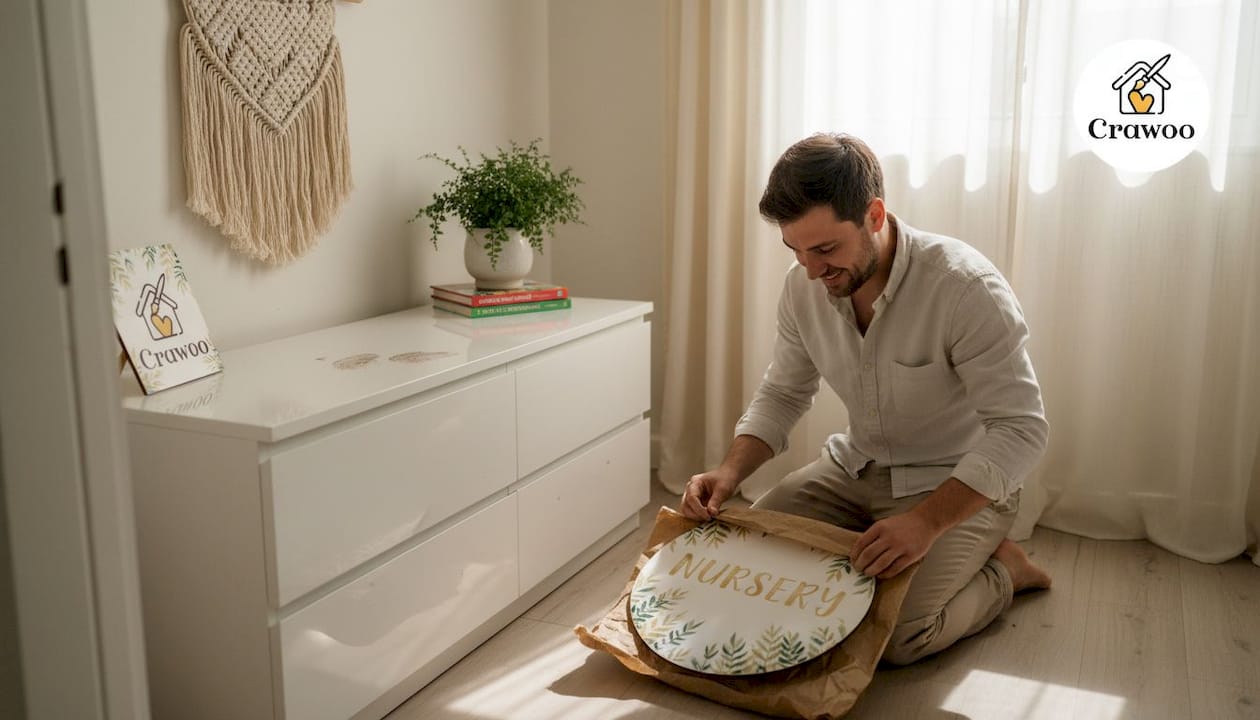
Pro Tip: Mix two sign types for a layered look. Pair a large wood name cut-out with a smaller hand-lettered quote sign below it. The contrast in scale and texture adds visual depth without feeling cluttered.
How to customize your nursery sign for maximum personality
Seeing the main types is one thing. Making one feel completely yours is another. Customization is where a good sign becomes a great one.
Start with the name or initials, but don’t stop there. Birth stats like date, time, weight, and length turn a simple sign into a keepsake. Family traditions also translate beautifully into decor. A phrase your grandmother always said, a motif tied to your cultural heritage, or a color that runs through your family’s story all add layers of meaning.
Here are quick customization options that make a real difference:
- Font choice: Script fonts feel soft and romantic; block fonts read bold and modern
- Layered materials: Combining wood with metal accents or acrylic overlays adds dimension
- Hand-lettering: Adds an artisan, one-of-a-kind quality no machine can replicate
- Color palette: Match your sign’s finish to your room’s accent color for visual harmony
- Symbolic motifs: Stars, moons, animals, and botanicals all carry meaning beyond decoration
“In 2026, the strongest nursery sign trend is moving away from literal name signs toward quieter, symbolic expression that reflects a family’s values rather than just a label.”
The 2026 personalization trends lean away from literal name signs toward quieter or symbolic expression. This means a sign featuring a constellation, a meaningful animal, or a family crest can feel more personal than a name alone.
For families who love storytelling through decor, a Disney inspired nursery sign taps into beloved characters that carry emotional weight. Adventure-themed rooms come alive with airplane nursery decor that hints at a life of curiosity and exploration.
Match the sign’s theme to an aspiration you hold for your child, not just the current room color. That intention is what makes decor feel genuinely personal.
Comparison of top nursery sign materials and styles
Choosing the right material shapes the entire mood of your nursery. Here is a side-by-side look at the most popular options.
| Material | Durability | Cost | Care | Best decor fit |
|---|---|---|---|---|
| Wood | Very high | $25 to $200 | Wipe with dry cloth | Farmhouse, boho, Scandi |
| Acrylic | High | $30 to $70 | Wipe with damp cloth | Modern, minimalist |
| Neon | Medium | $80 to $150 | Dust lightly | Eclectic, modern |
| Fabric/hoop | Medium | $20 to $50 | Spot clean or hand wash | Cottagecore, vintage |
| Ceramic | Very high | $40 to $90 | Wipe with damp cloth | Traditional, classic |
Wooden signs remain most versatile across boho, farmhouse, and modern nurseries, while acrylic is favored for clean, contemporary looks. The 2026 design preferences prioritize warmth and texture over stark minimalism, which explains why wood continues to dominate.
Key pros and cons to keep in mind:
- Wood: Warm, durable, and paintable, but heavier than other options
- Acrylic: Lightweight and modern, but can scratch if not handled carefully
- Neon: Dramatic and fun, but requires an outlet and may be too stimulating for sleep environments
- Fabric: Soft and handmade-feeling, but less durable over time
- Ceramic: Long-lasting and classic, but heavier and more fragile if dropped
For care, sealed wood and acrylic are the easiest to maintain. A dry or lightly damp cloth handles most dust and smudges. Fabric hoops benefit from occasional airing out to stay fresh.
If you want to explore finish and paint options further, painting wooden nursery signs is a great resource for understanding how different treatments affect both look and longevity.
A fresh perspective: Why trend-proof signs matter more than ever
Here is something most nursery decor guides won’t tell you: chasing the trend of the moment is the fastest way to end up redecorating in two years.
We see it constantly. Parents invest in a sign that perfectly matches a theme that felt urgent in the moment, only to find it clashes with everything once the room evolves. A child grows. Tastes shift. The jungle safari theme that felt perfect at birth can feel limiting by age three.
The smarter move is choosing a sign rooted in material quality and personal meaning rather than a specific aesthetic moment. Trends favor intentional, heirloom pieces over trendy ones, with wood signs remaining versatile across styles as 2026 emphasizes warmth and texture. A well-made custom wooden nursery sign with a name, a meaningful motif, or a family phrase will look just as right in a ten-year-old’s room as it did in the nursery.
Heirloom signs also carry emotional weight that trendy pieces simply cannot. They become the kind of object a child notices, asks about, and eventually takes with them. That is real value. Invest in thoughtful and enduring over clever and temporary.
Bring your nursery sign vision to life
You’ve done the research. You know your style, your material, and the personal touches that will make your sign truly one of a kind. Now it’s time to bring that vision off the screen and onto your nursery wall.
At Crawoo, every sign is crafted from quality wood and made to order, so your nursery gets exactly what you imagined. Browse the round nursery name sign for a soft, versatile option or explore the full range of custom wooden nursery signs to find the perfect fit for your room. For nature-inspired rooms, the woodland animals nursery decor collection brings warmth and character to any space. Your baby’s room deserves something made with intention.
Frequently asked questions
What materials are best for nursery signs in 2026?
Heirloom wood and modern acrylic are the most recommended materials because both offer durability and versatile style that holds up well beyond the nursery years.
How can I customize my nursery sign beyond just a name?
You can add birth stats, family quotes, unique colors, or motifs that reflect your heritage. 2026 personalization trends encourage subtle, symbolic choices that carry deeper meaning than a name alone.
Are nursery signs safe to hang above a crib?
Most signs are safe when securely fastened with proper hardware, but avoid heavy materials directly above the crib and always double-check that wall anchors are rated for the sign’s weight.
What are the most popular nursery sign colors for 2026?
Bold hues and mood-driven color schemes have overtaken neutrals as the top picks, with deep greens, warm terracottas, and rich blues leading the way.
What’s a good budget for a custom nursery sign?
You can expect to spend anywhere from $15 to $150 depending on material and craftsmanship, with DIY options starting around $10 and hand-lettered custom pieces reaching $200 or more.
Recommended
Subscribe to Our Newsletter
Leave a comment