


Creating a nursery that feels truly special goes beyond picking cute bedding and soft colors. Wooden lettering has become a powerful tool for new and expectant parents who want to transform their baby’s room into a personalized sanctuary. These customizable name displays and decorative words add warmth, character, and emotional significance to nursery spaces. This article explores the variety of wooden lettering options available, from materials and finishes to DIY approaches, helping you make informed choices that perfectly match your vision and budget for your little one’s first room.
Table of Contents
- What Is The Role Of Wooden Lettering In Nursery Decor?
- Materials And Finishes: Customizing Wooden Lettering To Match Nursery Themes
- DIY Wooden Lettering Versus Pre-Made Options: Cost, Creativity, And Quality
- Practical Tips For Decorating And Maintaining Wooden Lettering In Nurseries
- Explore Personalized Wooden Nursery Decor From Crawoo
- Frequently Asked Questions
Key takeaways
| Point | Details |
|---|---|
| Personalization power | Wooden lettering transforms generic nursery spaces into unique, sentimental environments that reflect your child’s identity |
| Material flexibility | Choose between MDF for budget-friendly options or Maple for premium durability, each accepting different finishes |
| DIY savings | Creating your own wooden name blocks costs significantly less than pre-made versions while offering complete creative control |
| Finish variety | Access to 48 paint colors and 12 stain options enables perfect coordination with any nursery theme or color scheme |
| Maintenance matters | Paint quality and proper drying techniques directly impact the longevity and appearance of your wooden lettering |
What is the role of wooden lettering in nursery decor?
Wooden lettering represents far more than simple wall decoration. These carefully crafted pieces serve as the emotional centerpiece of a nursery, announcing your baby’s name or displaying meaningful words that capture your hopes and dreams. Wooden lettering offers a personalized touch, allowing parents to create a unique and sentimental space for their child that generic store-bought decorations simply cannot match.
The appeal lies in the tangible, lasting quality of wood. Unlike paper prints or vinyl decals that may fade or peel, wooden letters become keepsakes you can preserve long after your child outgrows the nursery. Parents increasingly seek meaningful decor that tells a story, and custom wooden lettering delivers exactly that narrative element.
Customization options extend well beyond the name itself. You control every detail: the size that fits your wall space, the font that matches your aesthetic vision, and the finish that coordinates with your color palette. This level of personalization creates an intimate connection between the decor and your family’s identity.
Consider these core benefits wooden lettering brings to nursery design:
- Creates an immediate focal point that draws the eye and anchors the room’s design
- Establishes a warm, welcoming atmosphere that feels distinctly personal
- Offers flexibility to update or relocate as your child grows and tastes change
- Provides a handcrafted quality that elevates the overall aesthetic beyond mass-produced items
“The beauty of wooden lettering lies in its versatility. Whether you prefer rustic farmhouse charm, modern minimalism, or whimsical playfulness, wood adapts to your vision while maintaining its timeless appeal.”
For parents exploring personalised wooden letter options, the emotional value often outweighs the functional purpose. These pieces become part of your family’s story, featured in countless photos and memories from those precious early years.
Materials and finishes: customizing wooden lettering to match nursery themes
Selecting the right material forms the foundation of your wooden lettering project. The two primary options each offer distinct advantages depending on your priorities and budget. MDF provides an affordable, smooth surface ideal for painting, while Maple delivers natural grain beauty and superior durability that justifies its higher price point.
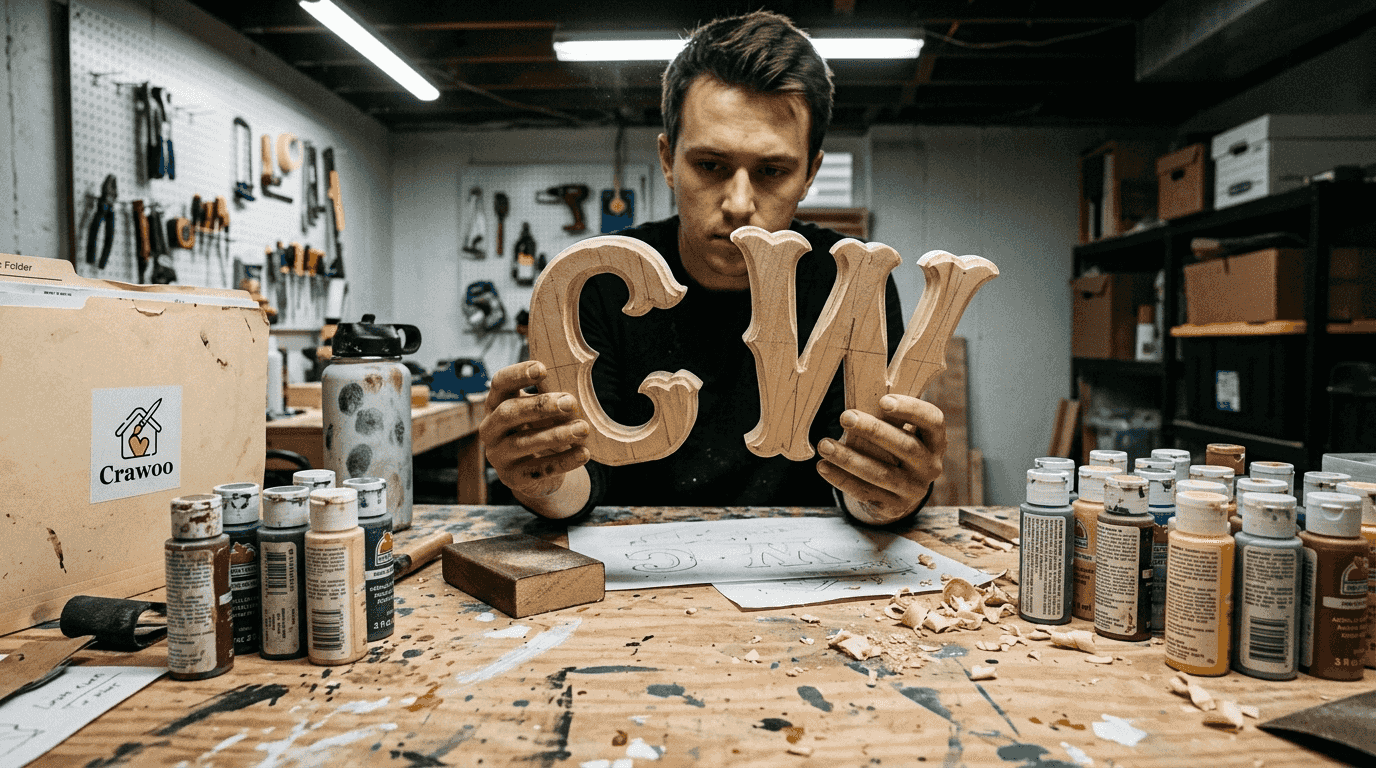
Choice of materials and finishes allows customization to match nursery themes perfectly. MDF works exceptionally well when you plan to apply opaque paint colors, as its consistent density accepts paint evenly without visible grain patterns. Maple shines when you want to showcase natural wood texture through stains or clear finishes that highlight the organic beauty.
Finishing options open up remarkable creative possibilities. Unfinished wood offers the ultimate blank canvas, letting you apply any treatment you envision. Stained finishes bring out wood grain while adding color depth, with 12 standard options ranging from light honey tones to rich espresso shades. Painted finishes provide the broadest color spectrum, with 48 choices spanning soft pastels perfect for traditional nurseries to bold primaries for modern spaces.
| Finish Type | Best For | Durability | Customization Level | | — | — | | Unfinished | DIY projects, natural look | Requires sealing | Complete freedom | | Stained | Showcasing wood grain | High with topcoat | 12 color options | | Painted | Matching specific colors | Very high | 48 color choices |
Matching finishes to your nursery theme requires thoughtful consideration of existing elements. Soft gray or white painted letters complement Scandinavian-inspired minimalist designs. Warm stained wood coordinates beautifully with bohemian or rustic themes featuring natural textures. Bright painted finishes in coral, mint, or navy work perfectly for gender-neutral or bold contemporary nurseries.
Popular finish combinations parents choose include:
- White painted letters on natural wood backing for clean contrast
- Weathered gray stain for vintage farmhouse aesthetics
- Pastel pink or blue paint matching bedding and curtain colors
- Natural Maple with clear protective coating for organic, eco-friendly spaces
Pro Tip: Test paint samples on scrap wood pieces before committing to your final letters, as colors appear different on wood versus paper swatches, especially under nursery lighting conditions.
For comprehensive guidance on coordinating wooden elements throughout your nursery design, explore options for personalized wooden decor unique nursery that create cohesive, intentional spaces.
DIY wooden lettering versus pre-made options: cost, creativity, and quality
The decision between crafting your own wooden letters or purchasing finished products involves weighing several important factors. DIY wooden name blocks offer cost-effective and personalized nursery decor that appeals to budget-conscious parents with creative inclinations. Raw wooden letters typically cost 60-70% less than professionally finished versions, making DIY an attractive option for families furnishing entire nurseries.
Creative control represents the most compelling DIY advantage. You select exact paint shades, apply decorative elements like glitter or patterns, and experiment with techniques like distressing or ombre effects. This freedom lets you match existing nursery elements precisely rather than settling for close approximations from pre-made catalogs.
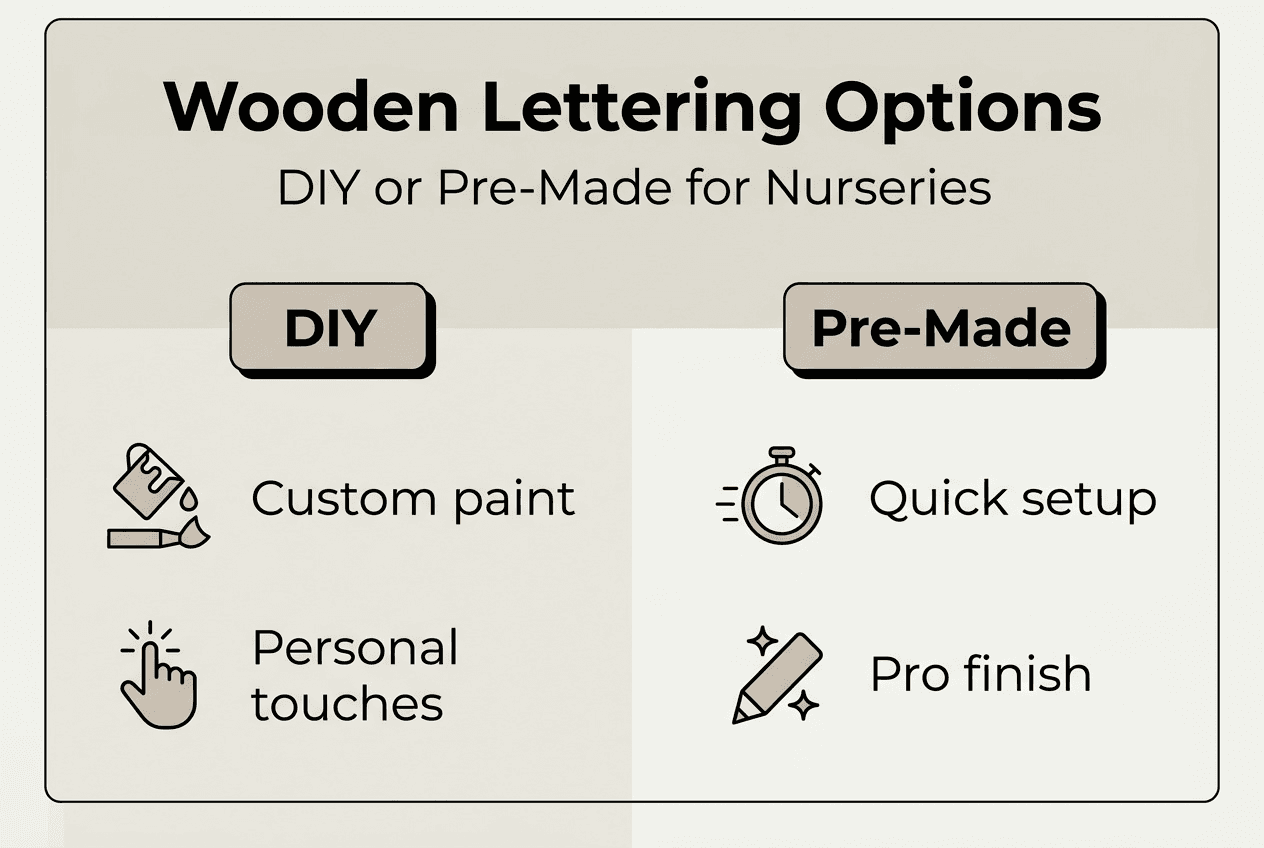
Quality considerations require honest assessment of your skills and available time. Professional finishes achieve smooth, even coats without brush marks or drips that amateur painters sometimes struggle to avoid. Pre-made options typically include protective topcoats ensuring durability against the inevitable bumps and cleaning a nursery environment demands.
| Factor | DIY Approach | Pre-Made Purchase | | — | — | | Cost | $15-30 for materials | $60-150 finished | | Time Investment | 4-6 hours including drying | Immediate use | | Customization | Unlimited creative freedom | Limited to available options | | Finish Quality | Variable, skill-dependent | Professional, consistent | | Satisfaction | High personal accomplishment | Convenience and reliability |
For parents choosing the DIY route, follow these steps for successful wooden lettering:
- Purchase unfinished wooden letters in your desired size and font from craft stores or online suppliers
- Sand all surfaces lightly with 220-grit sandpaper to ensure smooth paint adhesion
- Apply primer coat if using MDF or painting over dark wood for better color coverage
- Paint two to three thin coats rather than one thick application, allowing complete drying between layers
- Add decorative elements like vinyl stickers, ribbon, or small embellishments while paint remains slightly tacky
- Seal finished letters with clear acrylic spray or brush-on polyurethane for protection
- Attach mounting hardware appropriate for your wall type before installation
Pro Tip: Use a wipe-clean mat or plastic shower curtain to protect your workspace, as paint inevitably drips and splatters during application, saving cleanup time and preventing permanent stains.
Time-strapped parents or those seeking guaranteed professional results often find pre-made options worth the premium. The convenience of receiving ready-to-hang letters eliminates the multi-day process of painting, drying, and sealing. For detailed comparisons and styling inspiration, review the wooden name sign guide nursery decoration for practical insights.
Practical tips for decorating and maintaining wooden lettering in nurseries
Proper decoration techniques and ongoing maintenance ensure your wooden lettering remains beautiful throughout your child’s early years. Paint and sticker choices impact the final aesthetic and durability significantly, making informed selection crucial for long-lasting results.
Paint type matters more than many parents realize. Acrylic craft paints work well for decorative projects but may chip under heavy handling. Latex interior paint offers superior durability and easier cleaning, ideal for letters within reach of curious toddlers. Chalk paint creates trendy matte finishes but requires wax sealing for moisture protection in humid nursery environments.
Sticker quality varies dramatically between products. Vinyl decals designed for outdoor use adhere more reliably and resist peeling compared to paper stickers. Remove protective backing carefully to avoid paint damage, especially on freshly finished surfaces. Position stickers precisely on the first attempt, as repositioning risks lifting underlying paint layers.
Drying time deserves serious attention despite the temptation to rush. Touch-dry paint may feel ready but remains chemically vulnerable for 24-48 hours. Handling letters prematurely causes fingerprints, smudges, and permanent damage requiring complete refinishing. Plan your timeline accordingly, especially for multi-letter names requiring individual attention.
Cleaning wooden lettering requires gentle approaches that preserve finishes. Dust regularly with soft, dry cloths or microfiber dusters to prevent buildup. For sticky residues or marks, use barely damp cloths with mild soap, immediately drying to prevent water damage. Avoid harsh chemicals, abrasive scrubbers, or excessive moisture that degrades protective coatings over time.
Avoid these common decorating mistakes:
- Applying thick paint coats that create drips, uneven texture, and extended drying times
- Skipping primer on raw wood, resulting in blotchy color absorption and poor coverage
- Using low-quality brushes that shed bristles into wet paint, creating permanent imperfections
- Mounting letters before paint fully cures, causing damage during installation
- Placing wooden decor in direct sunlight, which fades colors and dries out wood over years
Pro Tip: Ensure paint dries completely for 48 hours minimum before peeling off any vinyl stickers or tape used for patterns, as premature removal lifts fresh paint and ruins your careful work.
For parents seeking professionally crafted options that eliminate these concerns, explore the custom wooden nursery sign collection offering ready-to-display quality without the DIY learning curve.
Explore personalized wooden nursery decor from Crawoo
After learning about materials, techniques, and maintenance, you might feel ready to bring personalized wooden lettering into your nursery. Crawoo specializes in custom wooden decor designed specifically for creating memorable, unique baby spaces that reflect your family’s personality and style preferences.
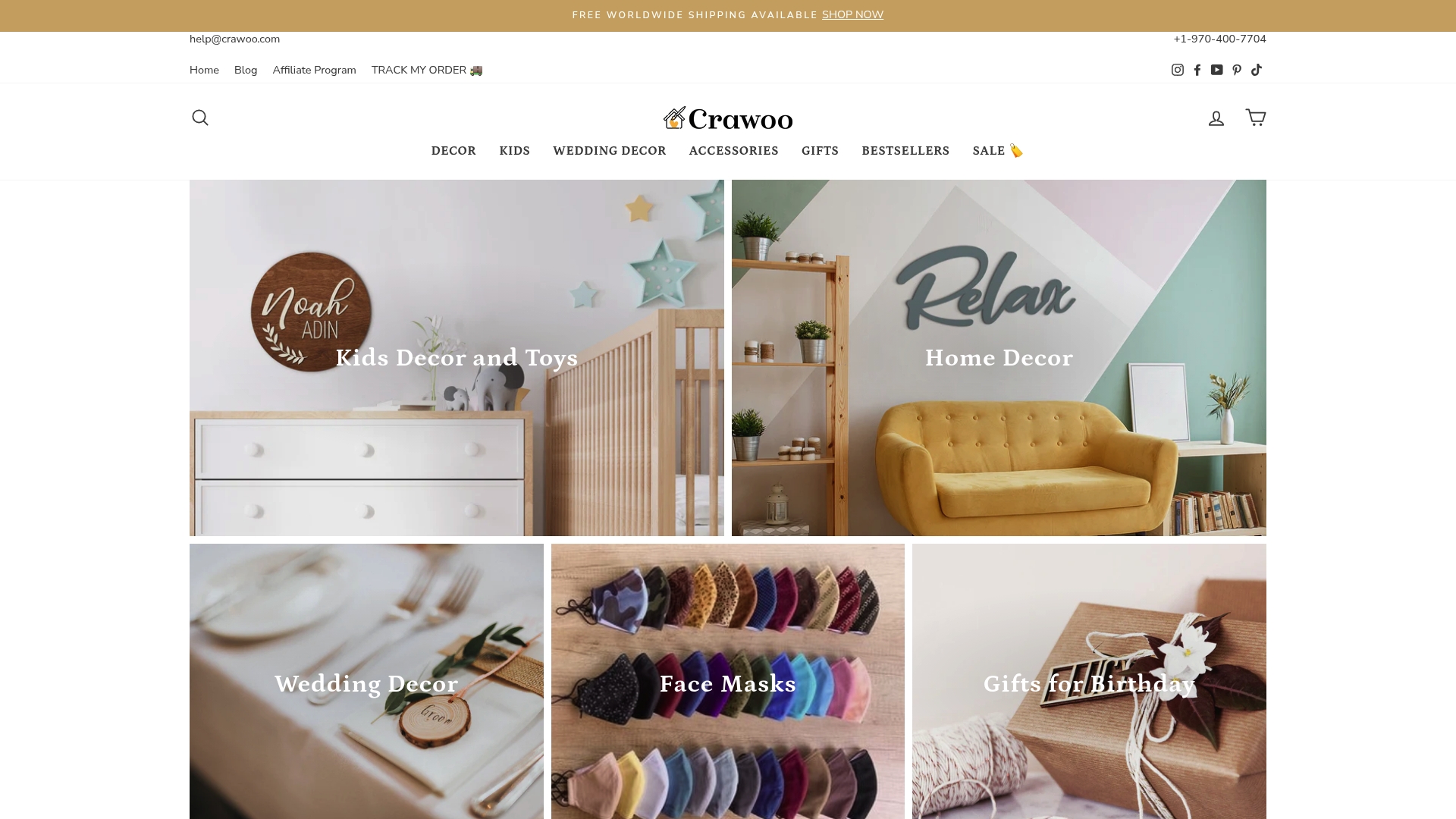
Our curated collection includes everything from individual letters to complete name displays, each customizable to match your exact vision. Choose your preferred wood type, select from dozens of finish options, and specify sizing that fits your available wall space perfectly. Whether you envision a bold statement piece above the crib or subtle accent letters on floating shelves, Crawoo delivers quality craftsmanship that transforms your nursery.
Browse the complete wooden sign gallery to discover inspiration across various themes and styles. For immediate solutions, explore popular options like the custom wooden nursery sign or personalized designs such as the abigail sign for nursery that showcase the possibilities available for your baby’s special space.
Frequently asked questions
What is the best wood type for wooden nursery letters?
Maple Wood offers durable, natural finishes with beautiful grain patterns that accept stains beautifully, making it ideal for showcasing wood’s organic beauty. MDF provides a budget-friendly alternative with smooth surfaces perfect for painted finishes, though it lacks the premium feel and longevity of solid hardwood. Your choice depends on whether you prioritize natural aesthetics or cost savings.
What paint finish works best on wooden letters?
Semi-gloss and satin paint finishes deliver the optimal balance of durability and aesthetic appeal for nursery wooden letters. Wide ranges of paint colors allow customization to personal style preferences. These finishes resist scuffs better than flat paints while remaining easy to wipe clean when inevitable nursery messes occur, maintaining their appearance through years of use.
How can I protect DIY wooden letters during painting?
Cover your entire workspace with materials designed for easy cleanup and protection. Using wipe-clean mats or shower curtains protects surfaces effectively when painting wooden projects. These barriers catch drips and splatters, then wipe clean or dispose of after completion, saving your furniture and floors from permanent paint damage while making cleanup quick and stress-free.
Are wooden letters safe for a baby’s room?
Wooden letters pose no safety concerns when properly prepared and installed. Use non-toxic, child-safe paint finishes specifically labeled for nursery use, and sand all edges smooth to eliminate sharp corners or rough spots. Mount letters securely to walls rather than placing them where babies might pull them down, and ensure no small decorative elements could detach and create choking hazards.
What sizes are available for wooden nursery letters?
Size choices allow integration into different nursery spaces effectively, from compact 4-inch letters perfect for shelf displays to dramatic 12-inch or larger statements for feature walls. Consider your available wall space, viewing distance, and overall room proportions when selecting sizes. Larger letters create bold focal points, while smaller versions work beautifully in gallery wall arrangements or grouped clusters.
Recommended
Subscribe to Our Newsletter
Leave a comment