


When you picture wooden alphabet decor, you might imagine simple block letters lined up on a shelf. But these handcrafted pieces are far more than basic decoration. They blend artisan carving techniques with educational purpose, transforming nursery walls and shelves into interactive learning spaces. Parents discover that choosing the right wood type, finish, and font unlocks endless personalization for celebrating milestones and matching nursery themes. This guide reveals how wooden alphabet decor is crafted, which materials work best for your style, and how these pieces support early literacy and fine motor development in toddlers.
Table of Contents
- How Wooden Alphabet Decor Is Crafted: Carving Techniques And Styles
- Choosing The Right Wood And Finish For Your Wooden Alphabet Decor
- Educational And Developmental Benefits Of Wooden Alphabet Decor
- Customizing Wooden Alphabet Decor For Nursery Themes And Milestones
- Discover Personalized Wooden Alphabet Decor At Crawoo
- Frequently Asked Questions
Key takeaways
| Point | Details |
|---|---|
| Crafting methods define quality | Incised carving and CNC cutting create distinct textures and precision levels for wooden letters |
| Wood types affect personalization | Oak delivers natural richness while poplar accepts custom paint colors for themed nurseries |
| Educational benefits support development | Wooden letters encourage tracing, sorting, and hands-on literacy in screen-free Montessori play |
| Customization matches milestones | Fonts, finishes, and name signs adapt to birth announcements and nursery design themes |
| Durability suits toddler interaction | Tactile carved surfaces withstand daily handling and exploration by curious young learners |
How wooden alphabet decor is crafted: carving techniques and styles
The craftsmanship behind wooden alphabet decor determines both its visual appeal and longevity in your nursery. Two primary methods dominate the market: traditional incised lettering and modern CNC cutting. Incised lettering is chip carving done with chisels and a mallet, creating depth and shadow that flat prints cannot replicate. Each letter receives individual attention from the carver, resulting in subtle variations that add character. The tactile grooves invite toddlers to trace letter shapes with their fingers, reinforcing shape recognition through touch.
CNC cutting offers a different advantage: flawless precision. Computer-guided routers carve custom signs with clean edges and consistent depth across every letter. This method eliminates the black scorch marks that laser cutting leaves behind, preserving the wood’s natural beauty. Parents who want matching sets or specific fonts benefit from CNC’s repeatability. A custom wooden nursery sign cut by CNC maintains uniform spacing and alignment that hand carving cannot guarantee.
Font selection plays a critical role in both methods. Carver-friendly fonts like Roman and Helvetica feature clean lines and adequate spacing between strokes. These designs resist chipping during the carving process and remain legible as toddlers handle them. Ornate or tightly spaced fonts create fragile areas prone to breaking, especially in hand-carved pieces. Carved wood signs provide premium visual presence compared to printed alternatives, but only when the font supports the carving technique.
Pro Tip: Examine letter thickness before purchasing. Thicker carved letters withstand toddler play better than thin decorative cuts, and deeper incisions create more dramatic shadows that enhance visual depth on nursery walls.
The carving method you choose influences maintenance and longevity. Hand-carved pieces develop a patina over time, with natural oils from handling adding warmth to the wood. CNC-cut letters maintain their crisp appearance longer but lack the organic texture of chip carving. Consider whether you value artisan uniqueness or manufacturing precision when selecting your wooden sign style. Both methods produce durable decor, but their aesthetic qualities serve different nursery design philosophies.
“The carved letter’s shadow and depth create dimension that printed letters never achieve, turning simple decor into functional art.”
Choosing the right wood and finish for your wooden alphabet decor
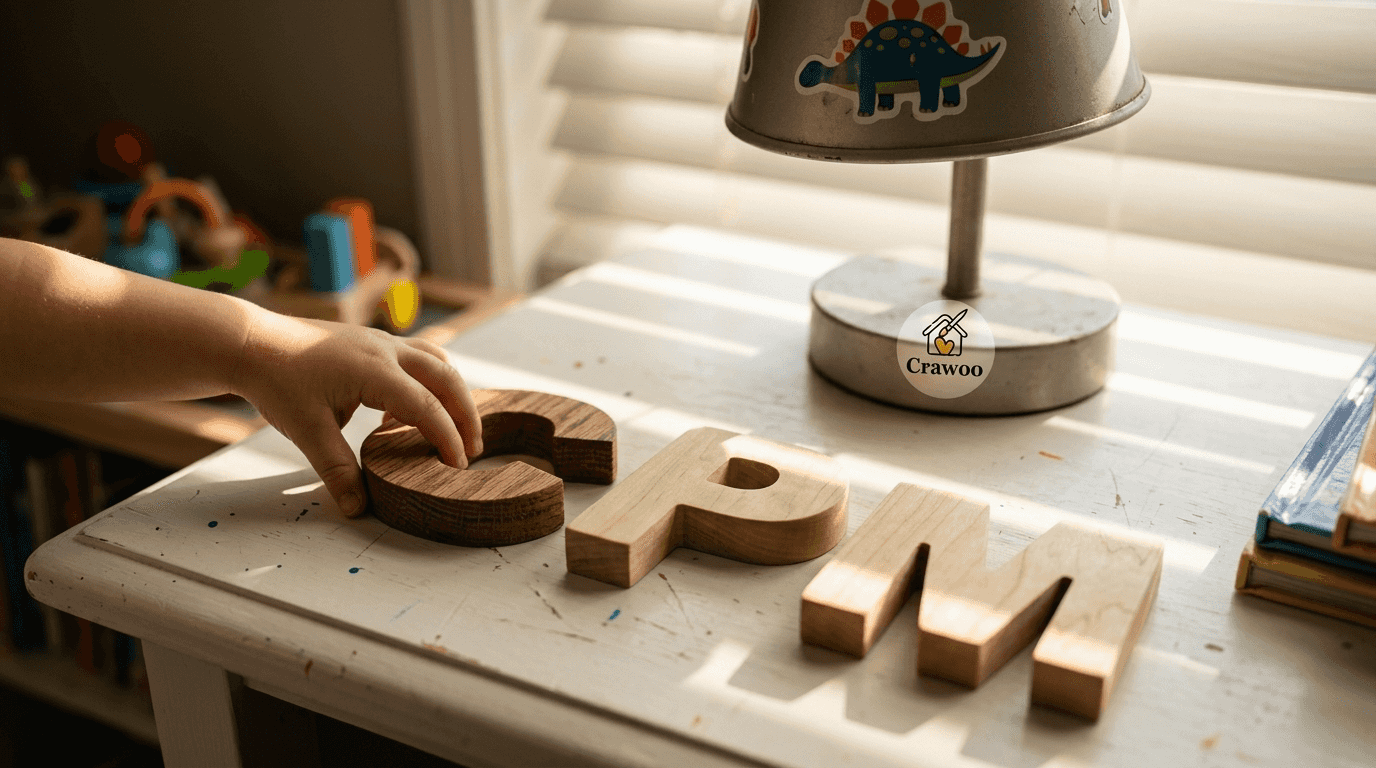
Wood species fundamentally alter how your alphabet decor looks and functions in the nursery. Oak with oil finish delivers rich natural appearance and exceptional durability, showcasing prominent grain patterns that add visual interest. The oil penetrates the wood fibers, enhancing color depth while protecting against moisture from curious toddler hands. Oak’s hardness resists denting when letters inevitably tumble from shelves during play sessions.
Poplar presents an entirely different option for parents who envision specific color schemes. This wood arrives unfinished, providing a smooth, consistent surface that accepts paint beautifully. You can match letters to nursery walls, coordinate with bedding patterns, or create ombre effects across the alphabet. Poplar’s fine grain prevents paint from pooling in crevices, ensuring even coverage. Parents who want custom wooden shelf words in precise Pantone matches find poplar ideal for their vision.
Wood thickness and letter dimensions significantly impact visual presence. Standard options range from half-inch thickness for lightweight wall mounting to two-inch depth for freestanding shelf displays. Larger letters command attention as focal points, while smaller sets integrate subtly into gallery walls. Consider your available space and desired prominence when selecting size. Thicker letters cast more dramatic shadows, enhancing the three-dimensional quality that makes wooden decor superior to flat alternatives.
Wood and finish comparison
| Wood Type | Best Finish | Ideal For | Maintenance | | — | — | — | | Oak | Oil or natural | Classic, timeless nurseries | Occasional oil reapplication | | Poplar | Paint or stain | Themed, colorful designs | Touch-up as needed | | Maple | Clear coat | Modern, minimalist spaces | Wipe clean regularly | | Walnut | Natural or wax | Sophisticated, dark themes | Dust and occasional wax |
Finish selection extends beyond aesthetics to practical considerations. Natural finishes require periodic maintenance but develop character as they age. Painted surfaces need touch-ups after years of handling but offer unlimited color flexibility. Sealed finishes protect against spills and sticky fingers, crucial for decor within toddler reach. Evaluate how much maintenance you’re willing to perform and whether you prefer the wood’s evolution or consistent appearance over time.
Pro Tip: Request finish samples on your chosen wood species before committing to a full alphabet set. Colors and textures vary dramatically between oak and poplar, and seeing actual finished pieces prevents disappointment when your order arrives.
Your nursery style guides wood and finish decisions. Scandinavian designs favor light woods with minimal finish, letting natural grain shine. Bohemian themes embrace painted poplar in earthy tones. Traditional nurseries benefit from oak’s warmth and gravitas. Modern spaces appreciate maple’s clean consistency. The wood you select becomes part of your nursery’s story, so choose materials that resonate with your family’s aesthetic values and lifestyle needs.
Educational and developmental benefits of wooden alphabet decor
Wooden alphabet decor transforms passive wall art into active learning tools for toddlers. Wooden alphabet boards encourage tracing and sorting, engaging multiple senses simultaneously. When toddlers run their fingers along carved letter grooves, they build muscle memory for letter formation before they ever hold a pencil. This tactile reinforcement accelerates letter recognition compared to visual-only methods like flashcards or screen-based apps.
Montessori principles emphasize self-directed exploration with natural materials, and wooden letters perfectly embody this philosophy. Unlike plastic alternatives, wood provides authentic sensory feedback through its weight, texture, and temperature. Toddlers naturally gravitate toward these organic materials, spending longer periods manipulating and examining each letter. The absence of electronic components or batteries encourages screen-free play that develops attention span and independent problem-solving skills.
Fine motor development accelerates through letter manipulation activities:
- Picking up individual letters strengthens pincer grasp essential for writing
- Arranging letters in sequence builds spatial reasoning and planning skills
- Matching uppercase to lowercase versions enhances visual discrimination
- Tracing carved grooves prepares hand muscles for pencil control
Integrating wooden alphabet decor into daily routines maximizes educational impact. Place letters at toddler height on wooden baby name shelves where children can access them independently during free play. Rotate which letters are available to maintain novelty and focus attention on specific phonics lessons. Use letters to spell family names, favorite words, or objects visible in the room, creating meaningful connections between symbols and concepts.
Parent-child interaction deepens when wooden letters become conversation starters. Ask your toddler to find the letter that starts their name, then celebrate their success. Create simple games like hiding letters around the nursery for scavenger hunts. These shared activities build positive associations with literacy while strengthening your bond. The physical nature of wooden letters makes learning collaborative rather than isolating, unlike tablet-based educational apps.
Pro Tip: Introduce three letters at a time rather than overwhelming toddlers with the full alphabet. Master recognition and sounds for a small set before adding more, building confidence through achievable milestones.
Milestone celebrations gain depth when wooden alphabet decor marks significant moments. Spell out your child’s age on their birthday using personalized wooden name signs as photo props. Document their growing vocabulary by photographing them with letters spelling newly learned words. These tangible markers create lasting memories while reinforcing that learning deserves recognition and celebration, fostering intrinsic motivation for future educational achievements.
Customizing wooden alphabet decor for nursery themes and milestones
Customization options transform generic wooden letters into personalized nursery statements. CNC cutting produces smooth edges without laser scorch marks, preserving wood’s natural beauty while enabling intricate font details. This precision matters when you want delicate script fonts or letters with thin serifs that hand carving cannot safely reproduce. The computer-guided process ensures every letter in a name sign maintains identical height and baseline alignment.
Finish variety allows precise matching to existing nursery elements. Natural wood finishes complement neutral palettes and organic themes. Stained options add depth while preserving visible grain patterns, ideal for rustic or woodland nurseries. Painted finishes enable exact color coordination with wall paint, bedding, or artwork. Some parents choose ombre effects across letter sets, transitioning from light to dark shades for visual interest. The finish you select should enhance rather than compete with your overall design scheme.
Font style comparison for wooden letters
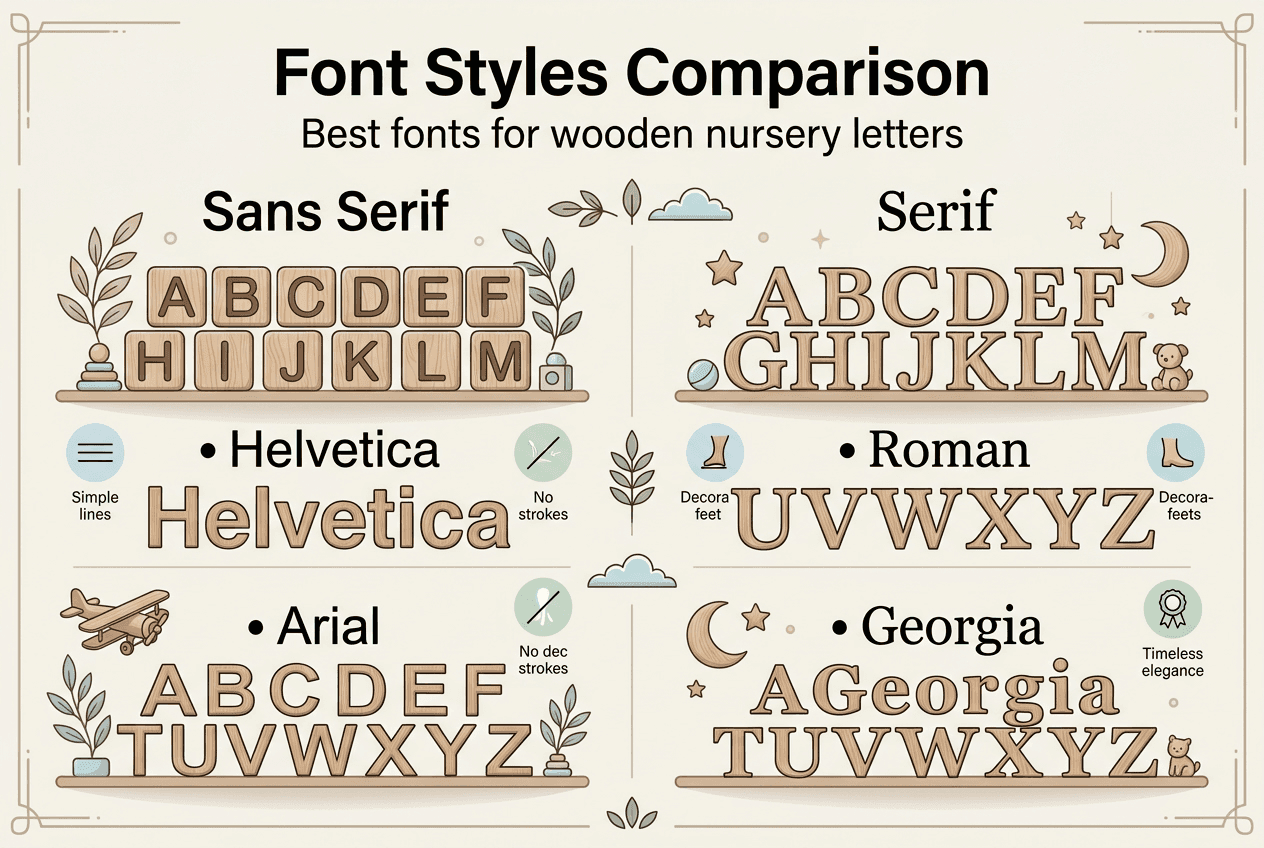
| Font Category | Readability | Carving Difficulty | Best Use |
|---|---|---|---|
| Sans serif (Helvetica) | Excellent | Easy | Learning-focused decor |
| Serif (Roman) | Very good | Moderate | Traditional nurseries |
| Script (Bella) | Good | Difficult | Decorative name signs |
| Block letters | Excellent | Easy | Toddler interaction |
Font selection balances aesthetic preference with practical durability. Carver-friendly fonts feature adequate spacing between strokes, preventing fragile connection points that snap under pressure. Script fonts create elegant custom wooden nursery signs but require careful handling. Block letters withstand rougher toddler play while maintaining clear readability for early learners. Consider how your child will interact with the letters when choosing between decorative beauty and functional resilience.
Name signs serve multiple purposes beyond simple identification. They mark the nursery entrance, establishing the space as belonging specifically to your child. Birth announcement signs capture vital statistics like date, time, weight, and length for lasting keepsakes. Milestone markers celebrate first words, steps, or birthdays with changeable letter arrangements. The versatility of custom wooden shelf words means you can update displays as your child grows without purchasing entirely new decor.
Pro Tip: Order extra vowels when purchasing individual letter sets. Words require multiple A’s, E’s, and O’s, and having duplicates expands your spelling possibilities for games and learning activities without buying complete second sets.
Theme coordination extends wooden alphabet decor’s impact throughout the nursery. Nautical themes pair beautifully with rope-wrapped letters or anchor motifs integrated into name signs. Woodland nurseries benefit from letters adorned with carved leaves or animal silhouettes. Celestial themes incorporate moon and star cutouts within letter designs. The customization possibilities let wooden decor serve as both functional literacy tools and cohesive design elements that unify your nursery’s visual story.
Color psychology influences finish choices for different developmental goals. Soft pastels create calming environments conducive to sleep and quiet play. Bold primary colors stimulate visual development and energize active learning spaces. Neutral wood tones provide timeless backdrops that adapt as your child’s preferences evolve. Consider whether you want the letters to blend harmoniously or stand out as attention-grabbing focal points when selecting your finish palette.
Discover personalized wooden alphabet decor at Crawoo
Your journey from understanding craftsmanship to envisioning the perfect nursery setup leads naturally to finding quality pieces that match your vision. Crawoo curates handcrafted wooden alphabet decor and name signs that combine artisan quality with customization flexibility. Each piece receives expert CNC cutting for precision edges and smooth finishes that protect curious toddler hands. Choose from natural oak, paintable poplar, and various stain options that coordinate with your existing nursery palette.
Explore the complete wooden sign selection to compare fonts, sizes, and finish options side by side. Discover how custom wooden nursery signs can commemorate your child’s birth details or spell out meaningful words that reflect your family values. Browse coordinating pieces in the kids wall decor collection to create cohesive gallery walls that grow with your child. Every piece arrives ready to display, backed by craftsmanship that prioritizes both beauty and durability for years of learning and celebration.
Frequently asked questions
What exactly is wooden alphabet decor?
Wooden alphabet decor consists of handcrafted or CNC-cut letters made from solid wood species like oak, poplar, or maple. These three-dimensional pieces serve dual purposes as nursery decoration and interactive literacy tools. Unlike flat printed letters, wooden versions offer tactile depth through carved grooves or raised surfaces that toddlers can trace and manipulate during play.
Why choose wooden alphabet decor over plastic or foam alternatives?
Wooden letters provide authentic sensory experiences through natural weight, texture, and temperature that synthetic materials cannot replicate. They align with Montessori educational principles emphasizing organic materials for child development. Wood’s durability outlasts plastic alternatives, and its aesthetic appeal matures gracefully rather than appearing dated as trends change. Parents also appreciate wood’s sustainability compared to petroleum-based plastics.
How do I customize wooden letters to match my nursery theme?
Customization begins with selecting wood species and finish type. Oak with natural oil suits traditional themes, while painted poplar enables exact color matching to walls or bedding. Font choice ranges from simple block letters for learning focus to elegant scripts for decorative impact. CNC cutting accommodates intricate designs, and you can add personalized details like birth dates or meaningful symbols integrated into letter shapes.
At what age can toddlers safely interact with wooden alphabet decor?
Toddlers typically begin purposeful interaction with wooden letters around 18 months when they develop sufficient fine motor control and object permanence. Ensure letters are large enough to prevent choking hazards, generally three inches or larger in any dimension. Supervise initial play sessions to teach gentle handling, and mount smaller letters securely on walls if you have concerns about mouthing or throwing during younger developmental stages.
What maintenance do wooden alphabet letters require?
Maintenance depends on finish type. Natural oil finishes benefit from occasional reapplication every 12 to 18 months to maintain luster and protection. Painted surfaces may need touch-ups after years of handling, especially on high-contact edges. Sealed finishes simply require regular dusting and occasional damp cloth wiping. Avoid soaking wooden letters or using harsh chemicals that strip protective coatings or damage wood fibers.
Can wooden alphabet decor support actual literacy development?
Absolutely. Research shows multisensory learning accelerates letter recognition and retention compared to visual-only methods. Tracing carved letter grooves builds muscle memory for letter formation before formal writing instruction begins. Sorting and matching activities with wooden letters develop visual discrimination skills essential for reading. The tactile engagement keeps toddlers focused longer than screen-based alternatives, increasing practice time and learning effectiveness.
Recommended
Subscribe to Our Newsletter
Leave a comment